
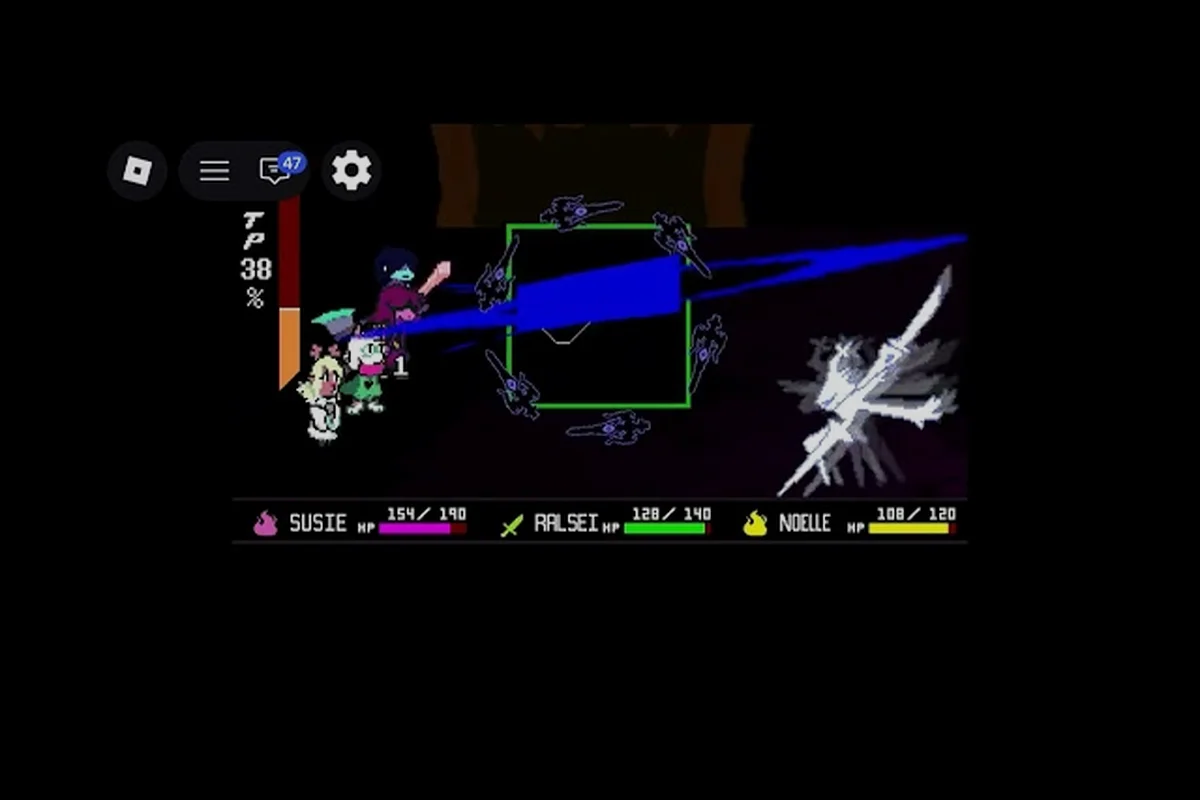
Getting a group into the same DELTARUNE Fight lobby is the first real hurdle for multiplayer runs, and most failed sessions happen before the first boss even loads. This guide breaks down the invite flow, private server setup, and party habits that make co-op boss fights actually work, so you can stop wrestling with menus and start coordinating attacks.
The Party Setup Flow Before a Run
The DELTARUNE Fight play with friends experience starts long before anyone touches a boss arena, because the Roblox lobby flow determines whether your group stays together or gets scattered across separate servers. Players report that the most reliable approach is to have one person act as the party anchor, load into a server first, and then send invites through the Roblox friend menu rather than relying on the in-game server browser. The official Roblox page lists a maximum 15 players per server, which means a full group can theoretically fit into one instance, although community reports suggest that coordination gets harder as the party grows beyond a handful of fighters.
The invite flow itself is straightforward once you understand the sequence, but small mistakes here cause most failed sessions. The anchor player should confirm they are inside a stable lobby before sending invites, because inviting friends into a server that is about to rotate or fill up leads to dropped connections and confused party members. Players also report that the Z to confirm, X to go back, C for context-dependent action control scheme applies to menu navigation, so the anchor should be comfortable with those keys before trying to guide others through the setup.
| Setup Step | What the Anchor Does | What Party Members Do |
|---|---|---|
| Load a lobby | Enter DELTARUNE Fight from the Roblox page and wait for the boss selection screen | Stay on the Roblox home screen until invited |
| Send invites | Open the Roblox friend menu and invite each party member | Accept the invite from the Roblox notification |
| Confirm roles | Check that everyone sees the same boss roster | Report any missing bosses or menu desync |
| Start the fight | Select the boss and difficulty tier | Confirm readiness before the arena loads |
The party anchor role matters more than most new players expect, because the person who loads the lobby first effectively controls the session for everyone else. If the anchor leaves or disconnects, the remaining players often get pulled into a new server or lose their place in the boss queue, which is why experienced groups rotate the anchor role between runs to avoid a single point of failure. Understanding this flow before your first DELTARUNE Fight play with friends session saves a lot of frustration, especially when you are trying to coordinate with players on different devices or in different regions.
Private Server Options and Why They Matter
A private server is the single most useful tool for consistent DELTARUNE Fight multiplayer sessions, because it removes the randomness of public matchmaking and gives your group full control over who joins. Players report that private servers reduce the chance of a stranger filling the last slot, which matters when you are practicing a specific boss or trying to keep a coordinated team together. The trade-off is that private servers require the host to stay online, and some players note that the experience can feel emptier without the chaos of random fighters dropping in.
Setting up a private server for DELTARUNE Fight follows the standard Roblox flow, but there are a few habits that make it smoother for boss-rush play. The host should create the private server from the game page, copy the invite link, and share it directly with party members rather than posting it in a public chat. This keeps the session contained and prevents uninvited players from joining mid-run, which is especially important when you are attempting a harder difficulty tier and need everyone focused on the same strategy.
| Server Type | Best For | Main Limitation |
|---|---|---|
| Public lobby | Quick sessions with random players | No control over who joins or leaves |
| Private server | Coordinated practice and friend groups | Host must stay online to keep it alive |
| Friend-only invite | Small groups that want a middle ground | Still requires manual invite management |
The private server choice also affects how your group handles the difficulty tier selection, because a locked-down lobby lets you agree on Standard, Brutal, or Genocide without outside interference. Community videos show that higher tiers demand tighter coordination, and a private server gives you the space to practice those patterns without a random player pulling aggro or wasting TP on inefficient attacks. When you are learning how to play with friends in DELTARUNE Fight, starting in a private server is the fastest way to build a shared language for boss tells and attack windows.
Coordinating Roles and TP Spending as a Group
The biggest shift from solo play to DELTARUNE Fight co-op is that TP spending becomes a group decision rather than a personal one, because wasted skill points on a low-value attack can leave the whole party without resources during a critical phase. Players report that successful groups assign a shot-caller who watches the boss pattern and announces when to spend TP on high-impact moves like Rude Buster, which community videos show as a powerful attack that can skip certain final-phase patterns. Without that coordination, everyone tends to dump TP at the same time and then struggle through the recovery window.
Role assignment does not mean rigid class systems, because this Roblox boss-rush does not confirm the playable status of characters like Kris, Susie, Ralsei, or Noelle from the original Deltarune game. Instead, roles are about behavioral habits: one player focuses on steering the Soul through bullet patterns, another watches for boss tells, and a third manages TP timing. The confirmed boss line-up as of the September 2026 build includes Tenna, King, Pink, and Kaizo Knight, and each one rewards a slightly different coordination rhythm.
| Boss | What the Phase Demands | Helpful Group Habit |
|---|---|---|
| Tenna | Fast bullet patterns that punish greedy attacks | One player calls out safe zones while others hold TP |
| King | Wide, high-damage swings with clear telegraphs | Assign a dedicated dodger to bait attacks away from the group |
| Pink | Pressure that tests sustained movement | Rotate who leads the Soul so nobody fatigues |
| Kaizo Knight | A long endurance stretch with escalating pressure | Save TP for the final stretch and communicate before spending |
The how many players question comes up constantly in DELTARUNE Fight multiplayer discussions, and the honest answer is that the ideal group size depends on what you are trying to accomplish. The server supports up to 15 players, but community reports suggest that two to four coordinated fighters perform better than a full lobby of strangers, because smaller groups communicate more clearly and waste less TP on overlapping attacks. A duo can handle most bosses with practice, while a trio gives you enough coverage to have a dedicated shot-caller without too much cross-talk.
Reading Boss Tells as a Team
Boss tells are the shared language of any DELTARUNE Fight co-op boss fight, and groups that call them out consistently survive far longer than groups that rely on individual reaction speed. A community recording titled SUSIE ASKS NOELLE FOR HELP TO BEST KAIZO KNIGHT! (Deltarune Fight) posted by danieltheninjarobloxgaming shows the Kaizo Knight encounter in action, and the footage illustrates how much information is available before each attack if you know where to look. The recording features those characters in the fight, but it does not confirm a specific co-op control scheme, so treat the visual patterns as reference material rather than a step-by-step multiplayer guide.
The most effective groups develop a callout vocabulary that is short and unambiguous, because long sentences get lost in the chaos of a bullet phase. Instead of saying "watch out for the attack that comes from the left side after the boss glows," a shot-caller might say "left sweep" or "hold center," which everyone understands instantly. This habit matters most on Brutal and Genocide tiers, where the pressure leaves little room for clarification, and community videos show that the hardest tier punishes hesitation more than anything else.
| Callout Type | Example | Why It Works |
|---|---|---|
| Directional | "Left sweep incoming" | Tells everyone where to move without extra words |
| Resource | "Hold TP, phase change soon" | Prevents wasted spending before a critical window |
| Position | "Stack center" or "Spread out" | Coordinates movement for specific attack patterns |
| Timing | "Short window, attack now" | Signals when a safe damage opportunity opens |
Practicing callouts in a private server before attempting a hard tier is one of the highest-value habits a group can build, because it turns individual reactions into a coordinated response. The DELTARUNE Fight how to play with friends question really comes down to this: the game does not hand you a party system with built-in communication tools, so you have to create that structure yourself through clear roles and consistent callouts. Once that shared language exists, the boss fights feel less like a scramble and more like a rhythm your group can repeat.
Difficulty Tiers and Group Composition
The three difficulty tier names from community videos — Standard, Brutal, and Genocide — create very different multiplayer experiences, and your group composition should shift accordingly. Standard is the right place to learn the DELTARUNE Fight multiplayer guide fundamentals, because the pressure is low enough that mistakes become teaching moments rather than instant wipes. Brutal demands that everyone understands their role before the fight starts, while Genocide is an endurance ceiling that punishes any lapse in coordination.
Groups that jump straight into Brutal or Genocide without building a shared rhythm on Standard often fall apart quickly, because the harder tiers expose every gap in communication and TP discipline. Players report that the best progression is to clear each boss on Standard as a group, then move up one tier at a time while keeping the same roles and callouts. This approach builds muscle memory for the boss patterns while gradually increasing the pressure, rather than throwing everyone into a wall they are not ready to climb.
| Tier | Group Readiness Signal | Common Failure Mode |
|---|---|---|
| Standard | Everyone can steer the Soul through basic bullet phases | Overconfidence leading to sloppy TP spending |
| Brutal | The group clears Standard without needing revives | Callouts break down under pressure |
| Genocide | The group has a consistent shot-caller and TP plan | Fatigue causes late-fight mistakes |
The DELTARUNE Fight how to join friends process is only the first step; what you do after everyone is in the lobby determines whether the session actually works. A group that agrees on a difficulty tier, assigns roles, and practices callouts will get far more value from a private server than a group that just queues up and hopes for the best. The party system guide covers the invite flow and server selection in more detail, but the core habit is the same: treat every session as a coordinated run, not a casual drop-in.
Building a Repeatable Multiplayer Routine
The groups that stick with DELTARUNE Fight co-op tend to develop a repeatable routine that removes decision fatigue from every session, because the less time you spend figuring out logistics, the more time you spend actually fighting bosses. A typical routine starts with the anchor loading a private server, sending invites through the Roblox friend menu, and confirming that everyone sees the same boss roster before selecting a tier. This takes a few minutes but saves far more time than dealing with scattered lobbies and dropped connections mid-run.
The routine should also include a post-fight debrief that is short and specific, because that is where the group identifies which callouts worked and which ones need adjustment. Players report that even a quick review after a wipe — "we spent TP too early on the second phase" or "the left sweep callout came too late" — leads to measurable improvement on the next attempt. The beginner guide offers a broader foundation for new players, but the multiplayer-specific habit is to treat every run as data for the next one.
| Routine Element | What It Looks Like | Why It Helps |
|---|---|---|
| Pre-fight check | Confirm roster, tier, and roles before starting | Prevents mid-fight confusion |
| In-fight callouts | Short directional and resource calls | Keeps everyone aligned under pressure |
| Post-fight debrief | One or two specific observations per player | Turns wipes into learning opportunities |
| Rotation | Switch anchor and shot-caller between sessions | Builds redundancy and shared ownership |
The DELTARUNE Fight private server habit becomes more valuable as your group progresses, because a locked-down lobby lets you run the same boss repeatedly without outside interference. This repetition is how you learn the subtle patterns that separate a clean Brutal clear from a chaotic wipe, and it is why serious groups invest the time to set up a private server even when public lobbies are faster to join. The routine is not about grinding for rewards; it is about building a shared understanding that makes every subsequent run smoother.
Frequently Asked Questions
How many players can join a DELTARUNE Fight server?
The official Roblox page lists a maximum 15 players per server, which means a full group can theoretically fit into one instance. However, community reports suggest that two to four coordinated fighters perform better than a full lobby of strangers, because smaller groups communicate more clearly and waste less TP on overlapping attacks.
Is there a private server option for DELTARUNE Fight?
Yes, players report that private servers are available through the standard Roblox flow, and they are the most reliable way to keep a coordinated group together. The host creates the server from the game page, copies the invite link, and shares it directly with party members to prevent uninvited players from joining mid-run.
How do I invite friends to a DELTARUNE Fight lobby?
The anchor player should load into a stable lobby first, then send invites through the Roblox friend menu rather than relying on the in-game server browser. Party members accept the invite from the Roblox notification, and the anchor confirms that everyone sees the same boss roster before starting the fight.
What is the best difficulty tier for a new multiplayer group?
Standard is the right place to learn the fundamentals of DELTARUNE Fight co-op, because the pressure is low enough that mistakes become teaching moments rather than instant wipes. Groups should clear each boss on Standard together before moving up to Brutal or Genocide, which demand tighter coordination and TP discipline.
Do I need a shot-caller for co-op boss fights?
A shot-caller is not mandatory, but players report that groups with a designated person watching boss patterns and announcing TP spending survive far longer than groups that rely on individual reactions. The shot-caller uses short, unambiguous callouts like "left sweep" or "hold TP" to keep everyone aligned during high-pressure phases.