
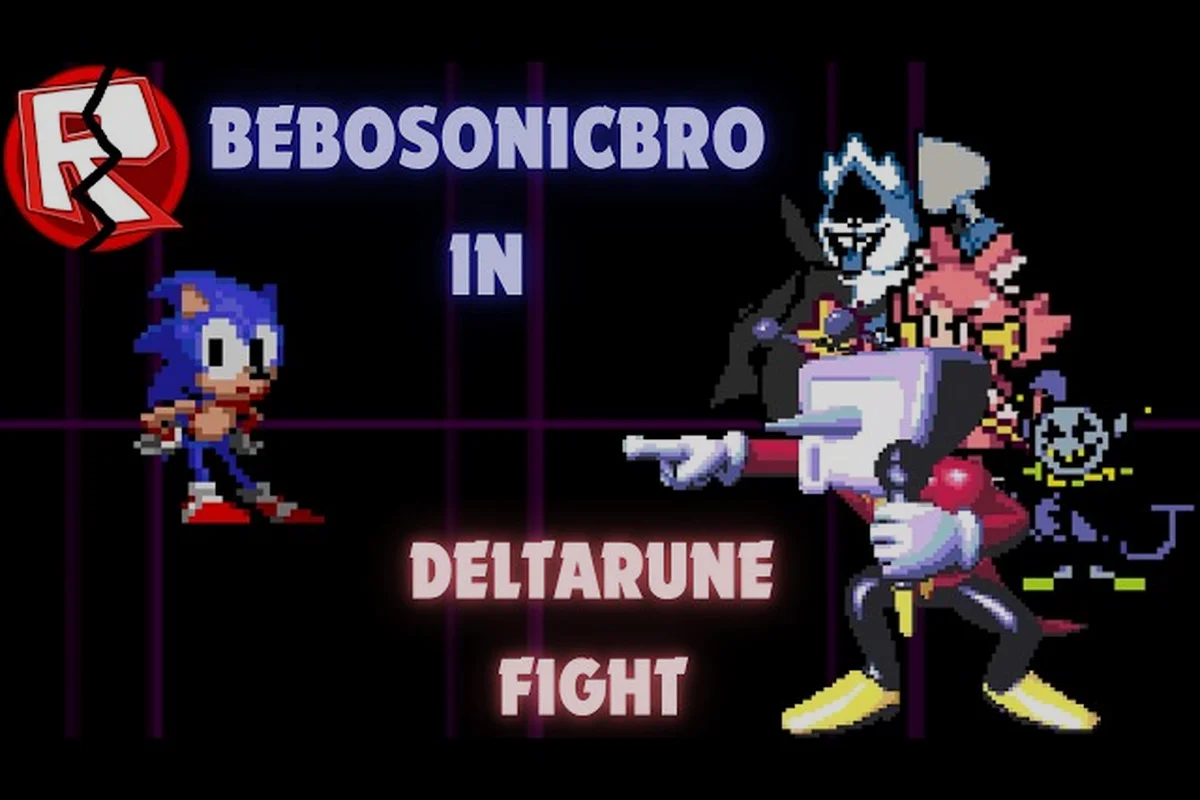
Getting comfortable with DELTARUNE Fight on Roblox means understanding a control scheme that feels familiar yet demands real-time precision. The game launched on August 11, 2026, and has already pulled in 2.26M+ visits, which tells you the demand for a clear set of deltarune fight tips is high. This guide breaks down the controls, keybinds, and a practical 2026 roadmap so you can stop flailing through bullet patterns and start clearing bosses with intent.
The Three-Button Layout That Runs Every Fight
The first layer of any solid deltarune fight tutorial is knowing what each input actually does. DELTARUNE Fight uses a three-button layout that mirrors the original game's menu logic while pushing you into live-action dodging. Your primary inputs are Z to confirm, X to go back, and C for the context-dependent action. This setup keeps the interface clean, but it also means your muscle memory needs to map three distinct functions before you can react under pressure.
How the Three Inputs Work in Practice
When you enter a boss encounter, the game splits into two alternating phases. During the bullet phase, you steer the Soul—the heart-shaped cursor that represents your position on the board—through gaps in the incoming attack pattern. You do not attack here. You survive. Once the attack window closes, the game hands you a turn where you spend TP to select an offensive move. The Z key confirms your selection, X backs you out if you mis-click, and C handles whatever contextual prompt appears, such as a special interaction or a menu toggle.
| Input | Function | When You Use It Most |
|---|---|---|
| Z | Confirm selection | Locking in an attack or menu option |
| X | Go back / cancel | Fixing a mis-click before committing |
| C | Context-dependent action | Special prompts during specific phases |
Because the original DELTARUNE uses a similar confirm/cancel rhythm, returning fans will adapt quickly, although the real-time bullet dodging adds a layer that the turn-based original never demanded. Reported by players, the biggest early mistake is treating X as a panic button during bullet phases, which does nothing but throw off your mental stack.
Why Keybinds Matter More Than You Think
The default keybinds are serviceable, but they are not optimized for every hand size or keyboard layout. Since DELTARUNE Fight does not currently expose a full in-game remapping menu according to community reports, players often rely on external tools or simply adapt to the default positions. The Z, X, and C cluster sits close together, which is great for quick thumb or index-finger movement but can cause accidental presses if you have larger hands.
A practical workaround is to practice the Z-X-C sequence in a low-pressure encounter before tackling harder tiers. The Standard difficulty gives you enough breathing room to internalize the layout, while Brutal and Genocide punish hesitation. If you are hunting for deltarune fight keybinds that feel more natural, the performance-focused guide on reducing input lag and remapping controls covers what players have tested so far.
Breaking Down the Fight Loop
Every boss in DELTARUNE Fight follows the same structural loop, and understanding that loop is the core of any effective deltarune fight tutorial. The game alternates between survival and retaliation. You dodge, then you strike. The rhythm never changes, but the density of the bullet patterns and the size of your safe windows shift dramatically depending on the difficulty tier you select.
The Survival Phase: Reading Patterns, Not Reacting Late
During the survival phase, your only job is to keep the Soul alive. Community videos show that each boss telegraphs its attacks with distinct visual cues, which means you should be reading the pattern before it reaches you rather than reacting to the bullet already on top of you. The Soul moves faster than most projectiles, so panic movement is usually what gets you hit, not the attack speed itself.
| Phase | Your Goal | Common Mistake |
|---|---|---|
| Survival | Keep the Soul out of danger | Overcorrecting into another bullet |
| Retaliation | Spend TP on the right attack | Wasting TP on a weak move |
| Transition | Reset position and focus | Dropping guard too early |
Players report that the hardest adjustment is unlearning the instinct to dodge everything. Some patterns are designed to push you into a corner, and the correct response is often a small, controlled movement rather than a full sweep across the board. The Soul cursor controls are tight enough that micro-adjustments work, but only if you are not mashing directional inputs.
The Retaliation Phase: Spending TP Wisely
Once the bullet phase ends, you get your turn. This is where TP becomes your most important resource. Each offensive action costs TP, and the game does not give you an infinite pool. You need to decide whether to spend on a heavy hit or save for a more reliable option. According to community videos, one attack name that appears is Rude Buster, which suggests the game borrows thematic flavor from the original DELTARUNE while keeping the numbers hidden.
Because the game publishes no official damage values, you have to learn through feel. A wide, high-damage swing might look impressive, but if it leaves you without TP for a follow-up, you are stuck waiting through another bullet phase. The smarter play is often a consistent, lower-cost attack that keeps pressure on the boss without bankrupting your resource pool.
The Confirmed Boss Roster and What Each Fight Demands
As of the September 2026 build, the confirmed line-up so far includes Tenna, King, Pink, and Kaizo Knight. That is not a closed roster claim—the game adds bosses over time—but these four are the ones you can reliably find and practice against. Each one tests a different skill, which makes them excellent benchmarks for your progress.
Tenna and King: The Entry Gauntlet
Tenna and King serve as the early skill checks. King in particular leans on wide, telegraphed swings that punish players who stand still, while Tenna introduces more complex bullet spreads that force you to manage space carefully. Neither boss is trivial on Brutal or Genocide, but on Standard they give you enough room to learn the core loop without feeling overwhelmed.
| Boss | Primary Demand | Best Habit to Build |
|---|---|---|
| Tenna | Space management | Controlled micro-dodges |
| King | Reading telegraphed swings | Early repositioning |
| Pink | Pattern density | Prioritizing safe gaps |
| Kaizo Knight | Endurance and precision | Consistent TP spending |
Community videos of King fights on higher tiers show that the attack density increases, but the fundamental patterns remain recognizable. That is good news for practice: time spent on Standard transfers directly to harder runs, even if the margins get tighter.
Pink and Kaizo Knight: The Advanced Wall
Pink and Kaizo Knight are where most players hit a wall. Pink layers multiple projectile types into the same attack window, which means you cannot rely on a single dodge direction. Kaizo Knight is treated by the community as a completion milestone—clearing this boss on Genocide is a badge of honor precisely because the fight demands sustained focus across a long stretch.
If you are struggling with the advanced combat loop, the advanced combat breakdown walks through how to read mixed patterns and manage TP under pressure. The key insight from community reports is that Kaizo Knight punishes greed. Taking a safe, low-damage turn is almost always better than reaching for a big hit and getting clipped during the next survival phase.
A Practical 2026 Roadmap for New and Returning Players
A clear deltarune fight roadmap helps you avoid wasting hours on the wrong goals. The game is still young—launched in August 2026—so the content pipeline is active, and new bosses are expected to arrive over time. Your roadmap should focus on building transferable skills first, then chasing the hardest clears.
Stage One: Lock In the Basics
Start on Standard difficulty and clear Tenna and King until you can do both without taking a single hit during the survival phases. This is not about speed. It is about internalizing the Z-X-C input rhythm and learning to read telegraphs before they resolve. The beginner controls guide covers the foundational habits that make this stage faster.
-
Clear Tenna on Standard without panic-dodging
-
Clear King on Standard while spending TP deliberately
-
Practice the Z-X-C sequence until it feels automatic
-
Watch one community video of each boss to learn the telegraphs
Stage Two: Push Into Brutal
Once Standard feels comfortable, move to Brutal. This tier increases attack density and shrinks your safe windows, but it does not change the fundamental patterns. Your goal here is to clear Pink on Brutal, which forces you to manage multiple projectile types at once. Expect to fail repeatedly—that is the point. Each failure teaches you which dodge direction works and which one gets you clipped.
Stage Three: Attempt Genocide and Kaizo Knight
Genocide is the hardest tier, and Kaizo Knight on Genocide is the current endgame. Do not rush this. Players who jump straight from Standard to Genocide report burning out quickly because the gap is too large. Build through Brutal first, then treat Genocide as a long-term goal. The patch and development tracker keeps you updated on when new bosses or balance changes arrive, which can shift the optimal roadmap.
Where Standard, Brutal And Genocide Diverge
The three difficulty tiers—Standard, Brutal, and Genocide—are not just number tweaks. According to community videos, the differences show up in attack density, safe-gap size, and how long you have to stay focused. That means a boss you can clear on Standard might feel like a completely different fight on Genocide, even though the attack names and visual patterns stay the same.
| Tier | Attack Density | Safe Window | Best For |
|---|---|---|---|
| Standard | Low | Generous | Learning patterns |
| Brutal | High | Tight | Refining reactions |
| Genocide | Very high | Minimal | Endurance and mastery |
The jump from Brutal to Genocide is the steepest, according to player reports. On Brutal, you can sometimes recover from a bad dodge by repositioning. On Genocide, a single mistake often cascades into a full wipe because the next attack is already on top of you. This is why the roadmap emphasizes a gradual climb rather than a direct leap.
Frequently Asked Questions
What are the basic DELTARUNE Fight controls?
The game uses Z to confirm, X to go back, and C for context-dependent actions. During bullet phases, you steer the Soul cursor to dodge attacks. During your turn, you spend TP to select an offensive move. The layout mirrors the original DELTARUNE menu logic.
How do I unlock harder difficulty tiers?
The Standard, Brutal, and Genocide tiers are available as difficulty options rather than unlockable content. According to community videos, you can select a harder tier for any boss you have access to. The challenge comes from the increased attack density, not from a progression gate.
Which boss should I practice first?
Start with Tenna on Standard difficulty. The fight introduces space management and controlled dodging without overwhelming you with projectile variety. Once you can clear Tenna consistently, move to King, which adds telegraphed swings that punish stationary play.
Is Jevil in DELTARUNE Fight?
According to community videos, Jevil may appear in some footage, but the game does not confirm him as part of the official boss roster. The confirmed line-up so far includes Tenna, King, Pink, and Kaizo Knight. Treat any Jevil appearance as unverified until the developer confirms it.
Does DELTARUNE Fight have a chapter structure?
No. This Roblox game has no chapter structure, no story route flags, and no SPARE or MERCY menu systems. It focuses entirely on boss encounters with a real-time dodge phase and a TP-based retaliation phase. The original DELTARUNE characters like Kris, Susie, Ralsei, and Noelle appear only as background context from the source material, not as confirmed playable fighters.
The best deltarune fight tips come down to three things: learn the Z-X-C input rhythm until it is automatic, treat every survival phase as a pattern-reading exercise rather than a reaction test, and climb the difficulty tiers gradually instead of leaping straight to Genocide. The game is still early in its life, with 2.26M+ visits and a maximum of 15 players per server, so the meta will keep evolving as new bosses arrive. Build your fundamentals now, and the harder clears will follow.