
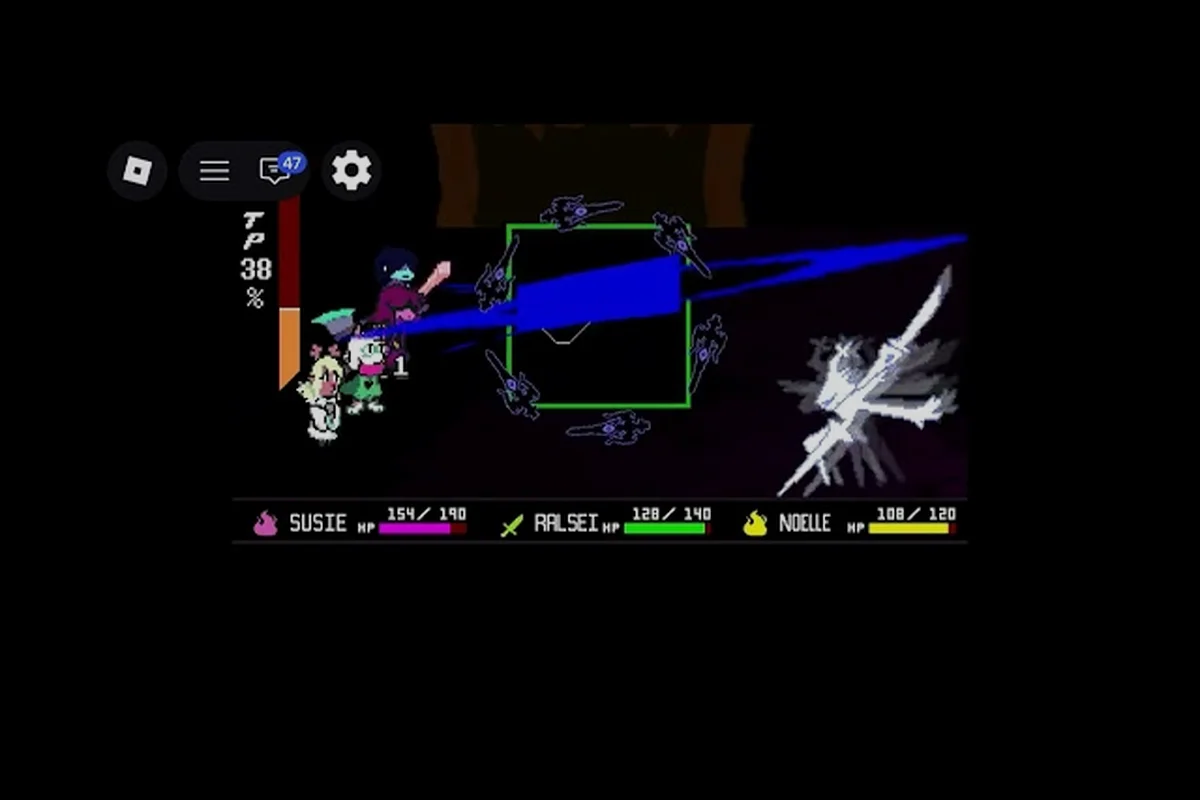
DELTARUNE Fight multiplayer bosses change the encounter in ways solo practice never prepares you for, because a second Soul in the arena turns every telegraphed sweep into overlapping danger. This guide breaks down how co-op scaling actually behaves in the current build, what the server cap means for group attempts, and why aggro splitting makes some confirmed fights far harder with a partner than alone. If you have only cleared these encounters solo, the habits that carried you there will not transfer cleanly into a shared arena, and knowing that early saves a lot of wasted attempts.
Understanding DELTARUNE Fight Multiplayer Bosses
DELTARUNE Fight multiplayer bosses are the core challenge that draws players into this Roblox boss-rush experience, and understanding how co-op scaling works is the difference between a clean clear and a frustrating wipe. The game launched on August 11, 2026, and has already accumulated over 2.26 million visits, which means thousands of players are actively testing how these encounters behave when multiple fighters join the same server. Because the official Roblox page publishes almost no mechanical details, most of what players know about co-op behavior comes from community testing and video documentation rather than developer patch notes.
The confirmed boss line-up so far includes Tenna, King, Pink, and Kaizo Knight, each presenting a distinct rhythm that shifts when additional players enter the arena. According to community videos, the difficulty tiers Standard, Brutal, and Genocide all support multiplayer sessions, though the higher tiers demand far more coordination than a solo run. A single server can hold a maximum of 15 players, which creates interesting dynamics when a full lobby attempts a boss at the same time.
| Boss | Solo Pressure | Multiplayer Pressure Shift | Coordination Demand |
|---|---|---|---|
| King | Slow but wide arena coverage | Chip damage spreads across more targets | Low — dodge independently |
| Tenna | Fast telegraphed swings | Aggro splits unpredictably | Medium — call out target switches |
| Pink | High-mobility chase phases | Multiple players split chase paths | High — avoid crossing streams |
| Kaizo Knight | Long endurance stretch | Revive windows become critical | Very high — planned rotations |
What makes DELTARUNE Fight multiplayer bosses feel different from solo play is not a published scaling formula but the practical reality of shared space. When two or more players stand in the same arena, attacks that would only threaten one hitbox now create overlapping danger zones, and the Soul cursor each player steers during bullet phases must navigate both the boss patterns and the movement of teammates. Players report that the hardest tier, Genocide, becomes significantly more punishing in co-op because a single downed teammate can cascade into a full party wipe if the remaining fighters cannot safely create distance.
How Co-op Scaling Works in DELTARUNE Fight
The exact co-op scaling values in DELTARUNE Fight are not published anywhere, so any claim about specific multipliers would be fabrication. What players can verify through repeated runs is that boss behavior changes qualitatively when more fighters are present. According to community videos, bosses do not simply gain more health in multiplayer; instead, their attack patterns become more frequent and their targeting logic becomes less predictable, which forces the group to spread out rather than stack on a single safe spot.
Aggro and Target Switching
In solo play, every attack is aimed at one Soul, making dodging a matter of reading the boss's wind-up. In a 2-player DELTARUNE Fight co op session, the boss alternates targets in ways that community testers describe as inconsistent, which means both players must treat every attack as potentially aimed at them. This is especially noticeable against Kaizo Knight, whose wide, high-damage swings can clip a player who assumed the boss was locked onto their partner.
| Player Count | Target Behavior (Community Reported) | Recommended Formation |
|---|---|---|
| 1 | All attacks track the single Soul | Free movement, focus on timing |
| 2 | Alternating targets, occasional double pressure | Spread to opposite sides |
| 3-4 | Frequent target swaps, overlapping patterns | Assign zones, call rotations |
| 5+ | Chaotic aggro, high chip damage risk | Designate a revive runner |
The TP system, which players spend on attacks, does not appear to change in multiplayer based on community reports, but the practical economy of TP shifts because you need to hold more in reserve for defensive repositioning. When a teammate goes down, the remaining player often burns TP faster to create breathing room, which means co-op teams should discuss who spends aggressively and who conserves resources before the fight starts.
Server Limits and Their Impact
The DELTARUNE Fight server limit is a hard cap of 15 players per server, and this number is confirmed on the official Roblox page. While 15 players can technically join the same boss arena, the practical sweet spot for DELTARUNE Fight multiplayer bosses appears to be 2 to 4 players according to community feedback. Larger groups create so much visual noise during bullet phases that individual Soul tracking becomes nearly impossible, and the chip damage from overlapping patterns accumulates faster than any coordination can offset.
Because there is no private server system confirmed for this game, players who want a controlled 2-player encounter typically join a low-population public server and hope the lobby stays small. The multiplayer setup guide covers how to join friends and manage lobby composition, which is useful context for anyone trying to arrange a clean co-op run without random players interfering.
The Confirmed Boss Roster and Co-op Demands
As of the September 2026 build, the confirmed boss line-up includes four encounters: Tenna, King, Pink, and Kaizo Knight. Any roster claim beyond these four is unverified, and players should treat community videos mentioning additional bosses with skepticism unless the developer confirms them. Each confirmed boss tests a different co-op skill, and understanding these differences helps teams decide which encounters to tackle first.
King: The Early Wall
King is the early roster boss and often the first real difficulty wall for new players. His patterns are slower than later bosses but cover more of the arena, which means mistimed dodges are punished by chip damage that accumulates across the fight. In a 2-player DELTARUNE Fight multiplayer session, King's wide coverage forces both players to maintain opposite positions, because standing together doubles the chance that one attack clips both hitboxes.
The key habit for King in co-op is patience. Because his attacks are telegraphed well in advance, players who panic and dash early create collisions with their partner. According to community videos, the most reliable approach is to let the boss commit to a swing, then move only as far as necessary to clear the hitbox, which keeps both players in safe zones without crossing paths.
Kaizo Knight: The Endurance Test
Kaizo Knight is widely considered the hardest confirmed encounter, and community video documentation shows players struggling with this boss even on Standard difficulty. The fight is a long stretch that tests resource management more than raw reaction speed, which makes it particularly punishing in co-op because both players must survive the entire duration without burning through their TP reserves too early.
A community video by danieltheninjarobloxgaming titled "SUSIE ASKS NOELLE FOR HELP TO BEST KAIZO KNIGHT!" captures a co-op attempt against this boss, and the footage shows how quickly a run can collapse when one player overcommits to offense. You can watch the Kaizo Knight co-op attempt on YouTube to see the target-switching behavior in action, which is far more instructive than any written description of the fight.
| Boss | Primary Co-op Failure Mode | Prevention Habit |
|---|---|---|
| King | Both players dodge into the same space | Assign left/right zones before the fight |
| Tenna | One player eats a telegraphed swing meant for the other | Call out "switching" when aggro changes |
| Pink | Chase paths cross and create trap corridors | Rotate clockwise, never reverse direction |
| Kaizo Knight | TP burned too early, no reserve for revive windows | Designate one player as the conservative anchor |
Practical Strategies for 2-Player Co-op
A 2-player DELTARUNE Fight co op run is the most controllable multiplayer experience because communication is direct and the arena has enough space for both Soul cursors to maneuver. The strategies below come from community testing and video documentation, not official guides, so treat them as starting points rather than rigid rules.
Pre-Fight Coordination
Before entering a boss arena, the two players should agree on three things: who leads the aggro, who holds defensive TP, and what the revive priority is. Because the game does not confirm any party system or role assignment mechanic, all coordination happens through voice or text chat outside the game's own UI. The party system guide explores how players organize lobbies and communicate during runs, which is essential reading for anyone who wants to move beyond random public matchmaking.
During the Fight
The most important co-op habit is zone discipline. Each player claims a side of the arena and commits to staying there unless a revive forces movement. When the boss switches targets, the player who is no longer being chased should reposition to maintain the zone split rather than following the boss and collapsing the spacing. This is especially critical against Pink, whose high-mobility chase phases can turn a 2-player arena into a tangled mess if both fighters chase the same target.
-
Call out target switches — a one-word call like "you" or "me" prevents both players from dodging the same attack into each other
-
Hold TP for revive windows — the player not currently targeted should save enough TP to create space when their partner goes down
-
Never cross the center line — treat the arena midpoint as a soft boundary that keeps both players in predictable positions
-
Reset after each phase — return to your assigned zone after every bullet phase, even if the boss has moved
Revive Logic in Co-op
Community videos suggest that downed players can be revived by their partner, though the exact input and timing window are not documented anywhere official. What players consistently report is that revive attempts are high-risk moments because the boss does not pause, which means the reviving player must judge whether the downed teammate is in a safe enough position to justify the exposure. In Genocide difficulty, a failed revive attempt often leads to a double wipe, so many experienced teams choose to let a downed player stay down and finish the fight solo rather than risk the full reset.
Difficulty Tiers and Multiplayer Scaling
The three confirmed difficulty tiers — Standard, Brutal, and Genocide — each reshape how DELTARUNE Fight multiplayer bosses feel in co-op. Because the game publishes no numeric differences between tiers, players rely on qualitative observations from repeated runs, and the community consensus is that the jump from Brutal to Genocide is the steepest difficulty spike in the game.
Standard: The Learning Tier
Standard is where most players first experience co-op, and the tier is forgiving enough that two players can clear confirmed bosses without perfect coordination. Boss attacks are telegraphed well in advance, and the chip damage from minor mistakes does not accumulate fast enough to threaten a run unless both players are consistently out of position. This tier is ideal for practicing zone discipline and target-switch calls before moving up.
Brutal: The Coordination Check
Brutal punishes the habits that Standard lets slide. According to community reports, attacks come faster and the windows between them shrink, which means both players must already know the boss patterns well enough to dodge without thinking. The tier is a coordination check more than a mechanical one: teams that communicate cleanly can clear it with the same strategies they used on Standard, while teams that rely on individual skill start wiping to overlapping patterns.
Genocide: The Endurance Ceiling
Genocide is the hardest tier, and community videos show that even experienced players struggle to maintain a full co-op run from start to finish. The fight becomes a long stretch where every mistake compounds, and the revive logic shifts from "always go for it" to "only go for it if the boss is locked onto the other player." Because the tier demands near-perfect execution from both players simultaneously, many teams treat a Genocide clear as a personal achievement rather than a farming goal.
| Tier | Co-op Feasibility | Primary Challenge | Recommended Team Size |
|---|---|---|---|
| Standard | Very accessible | Learning patterns and zones | 2-3 players |
| Brutal | Moderate | Tightened dodge windows | 2 players |
| Genocide | Very hard | Full-run endurance and revive judgment | 2 players |
The tier list guide ranks the confirmed bosses by overall difficulty, which helps teams decide whether to tackle King or Kaizo Knight first when moving up through the tiers.
Frequently Asked Questions
What is the DELTARUNE Fight server limit?
The DELTARUNE Fight server limit is a maximum of 15 players per server, confirmed on the official Roblox page. While 15 players can join the same boss arena, community testing suggests 2 to 4 players is the practical sweet spot for co-op boss runs because larger groups create visual chaos during bullet phases.
Can I play DELTARUNE Fight with 2 players?
Yes, a 2-player DELTARUNE Fight co op session is the most controllable multiplayer experience. Both players join the same public server and enter the boss arena together, then coordinate through external chat since the game does not confirm any built-in party system or role assignment mechanic.
Do DELTARUNE Fight multiplayer bosses scale with player count?
According to community videos, boss behavior changes qualitatively in multiplayer rather than through published numeric scaling. Attack patterns become more frequent and target switching less predictable, which forces co-op teams to spread out and maintain zone discipline instead of stacking on a single safe spot.
Which boss is hardest in co-op?
Kaizo Knight is widely considered the hardest confirmed encounter, especially on Genocide difficulty. The fight is a long endurance stretch that tests resource management, and a single downed teammate can cascade into a full wipe if the remaining player cannot safely create distance for a revive.
Is there a private server option for controlled co-op runs?
No private server system is confirmed for DELTARUNE Fight as of the September 2026 build. Players who want a controlled 2-player encounter typically join a low-population public server and hope the lobby stays small, or they coordinate with friends to fill a server before random players join.