
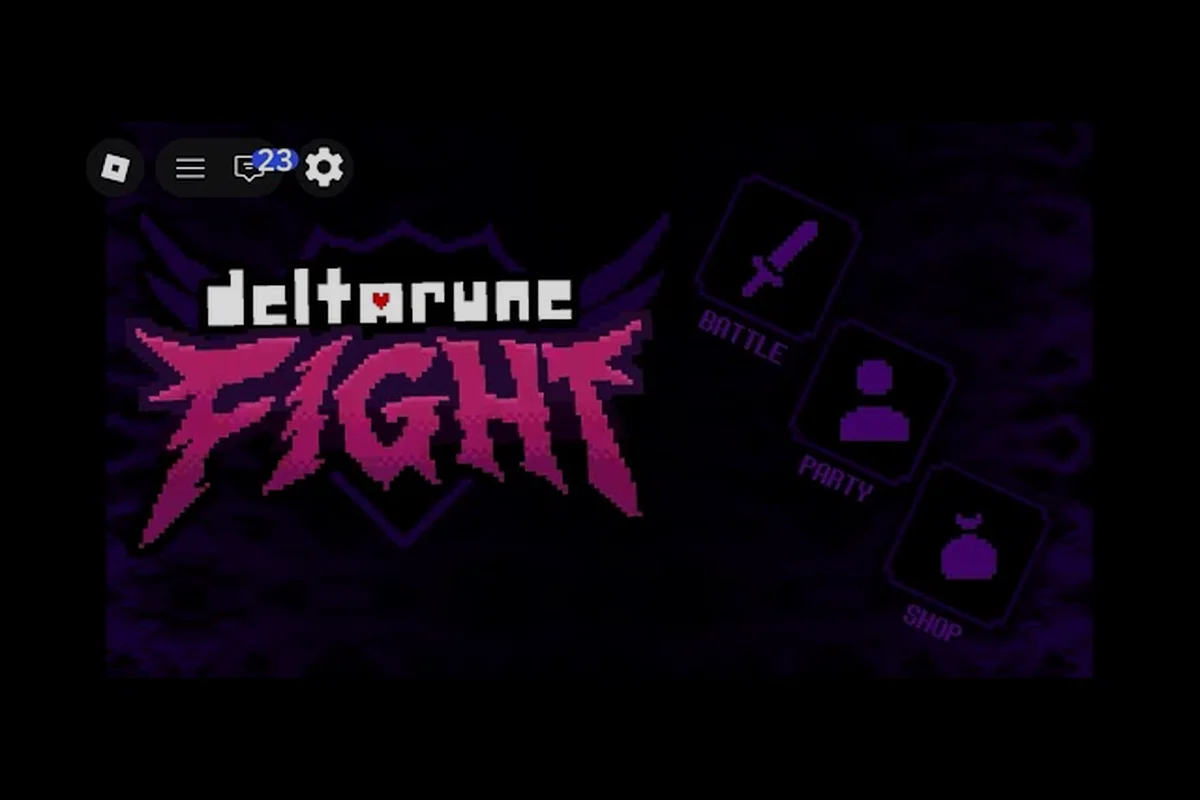
Getting a group into DELTARUNE Fight on Roblox is less about menus and more about timing, server choice, and knowing which role each player fills before the first bullet pattern starts. The party system rewards groups that agree on a plan early, because the confirmed bosses like Tenna and King punish scattered positioning within seconds. This guide breaks down how invites work, what versus and co-op actually demand, and which server habits keep a run from falling apart. a plan early, because the confirmed bosses like Tenna and King punish scattered positioning within seconds. This guide breaks down how invites work, what versus and co-op actually demand, and which server habits keep a run from falling apart. If your group keeps wiping on the same phase, the coordination drills in our Deltarune Fight Play With Friends guide can help you tighten callouts before the next attempt.
How the DELTARUNE Fight Party System Works Before a Run
The party system in DELTARUNE Fight does not hand you a formal lobby with role icons, ready checks, or matchmaking filters. Instead, players report that grouping happens through Roblox's native server join flow, which means the host picks a server, shares the experience link, and everyone lands in the same instance before selecting a boss. According to community videos, the game supports up to 15 players per server, but that ceiling rarely translates into a smooth fight because the arena scales pressure with every additional participant.
| Party setup step | What the host actually does | What the joining player reports | Why it matters before a run |
|---|---|---|---|
| Pick a server | Opens the Roblox experience page and enters a server instance | Receives the shared experience link and joins the same instance | The host's server choice determines whether the group lands together or splits across instances |
| Confirm the roster | Checks who actually loaded into the arena before selecting a boss | Confirms their Soul cursor appears and movement feels responsive | A player stuck on the loading screen still counts toward the server cap but contributes nothing to the fight |
| Choose a boss | Selects from the confirmed line-up so far — Tenna, King, Pink, or Kaizo Knight | Waits for the boss select prompt to appear on their screen | The party cannot coordinate a damage rotation until everyone sees the same boss select prompt |
| Agree on a style | Decides whether the session is a shared survival run or a damage rotation contest | Positions according to the agreed style before the first phase starts | A player dodging for personal survival positions differently than one dodging to protect a teammate's window |
| Set the difficulty | Picks Standard, Brutal, or Genocide from the community-reported tier names | Confirms the selected tier appears on their screen before the fight begins | The hardest tier changes how much pressure the arena scales with every additional participant |
What matters more than raw headcount is whether your group treats the session as a shared survival run or a coordinated damage rotation. In the co-op style, players spread across the arena to bait wide sweeps away from the group, while in the versus style, the same boss mechanics become a contest of who stays alive longest. The distinction changes how you read every phase, because a player who dodges for personal survival will position differently than one who dodges to protect a teammate's window.
Invite Flow and Party Setup
The invite flow follows a simple sequence, but each step has a failure point that community videos highlight repeatedly. The host must be inside the experience first, because Roblox invite links point to the game page rather than a specific server slot. Once the host confirms the instance has open slots, sending the link through a platform message or a group chat is the most reliable method reported by players.
-
Host launches the experience and waits for the spawn area to load completely
-
Host shares the Roblox experience link with the group
-
Each player joins through the link and confirms they see the same boss selection screen
-
The group agrees on a difficulty tier before anyone queues, because switching mid-session resets positioning
-
Players assign roles verbally or through external chat, since the game does not display class labels
The absence of an in-game role system means your party needs an external agreement on who handles what. One player typically volunteers to steer the Soul cursor through the densest bullet phases, while others focus on calling out when a screen-wide sweep is about to start. This division matters because the Soul is the heart-shaped cursor every player steers during bullet phases, and a group that fights over who leads will burn through the hardest tier quickly.
Why Server Choice Shapes the Party System
Server choice is the quiet variable that decides whether your party system holds together. A server with high latency turns a telegraphed dodge into a coin flip, and players report that the same boss feels dramatically different across instances. The best server for a party is not the one with the lowest ping number, but the one where every member experiences consistent timing, because a single desynced player can drag the whole group into a failed phase.
Community videos show that the Tenna boss leans on wide, screen-spanning patterns that require pre-positioning before a phase starts. If one party member sees the telegraph a fraction of a second late, the entire group's spacing collapses. That is why experienced groups test a server with a short warm-up run before committing to a long session, a habit that costs time but saves the frustration of mid-fight disconnects.
Co-op Mode Demands a Different Party Rhythm
Co-op mode in DELTARUNE Fight is not a passive carry mode where one strong player solos while others watch. The confirmed line-up so far, including Pink and Kaizo Knight, forces every participant to contribute to survival, because the bullet density scales with the number of active players. When a party treats co-op as a shared survival exercise, the rhythm shifts from individual dodging to spacing discipline and phase awareness.
The key difference shows up in how groups handle the alternation between survival turns and attack turns. During survival turns, every player steers their own Soul cursor through incoming patterns, and the group's survival depends on not clustering. During attack turns, the party spends TP on attacks, and the group's damage output depends on everyone committing at the same time. A party that saves TP during the wrong window extends the fight into more dangerous phases.
Role Assignments That Keep Co-op Runs Alive
Without formal role labels, co-op parties fall back on three functional roles that community videos demonstrate repeatedly. The baiter positions near the edge to pull tracking volleys away from the center, the caller watches boss tells and announces when a wide sweep is coming, and the anchor stays near the middle to give the group a stable reference point. These roles rotate between phases, because a fixed assignment leaves one player exhausted during the longest stretch.
| Role | Primary Job | Best Habit | Common Failure |
|---|---|---|---|
| Baiter | Pulls tracking volleys to the edge | Pre-position before the telegraph | Dashing back through the group |
| Caller | Reads boss tells and announces sweeps | Uses short, clear callouts | Describing instead of warning |
| Anchor | Holds center as a reference point | Keeps movement minimal | Drifting into the baiter's lane |
| Rotator | Fills gaps when someone is cornered | Watches the weakest position | Overcommitting to one side |
The table above reflects what players report from successful co-op sessions, not an official role system. The most reliable groups rotate the rotator role constantly, because a boss like King punishes any player who stands still for too long. When a party locks roles for the entire fight, the predictable movement patterns become easy targets for the boss's tracking attacks.
TP Spending as a Party Decision
TP is the skill resource spent on attacks, and in co-op mode it becomes a shared budget rather than a personal meter. A party that spends TP independently will hit the attack turn with uneven resources, which forces the group to either wait for a slow member or waste a damage window. The better habit is to agree on a spend threshold before the fight: everyone saves until the caller announces a safe attack turn, then commits together.
This coordination matters most on the Brutal and Genocide difficulty tiers, where the margin for wasted attacks shrinks dramatically. Community videos show that a full TP bar spent during a safe window can shorten the fight enough to skip an entire late phase, while a half-spent bar during a risky window often leads to a party wipe. The party system, in this sense, is a resource-timing system as much as a social one.
Versus Mode Turns the Same Boss Into a Contest
Versus mode in DELTARUNE Fight does not pit players against each other directly. Instead, the same boss mechanics become a survival contest, where the winner is the player who stays alive longest or contributes the most damage before falling. This changes how a party reads every phase, because a player who would bait for the group in co-op now has a personal incentive to abandon that role.
The tension is most visible against Tenna, whose wide, screen-spanning patterns force players to choose between safe positioning and aggressive damage. In versus mode, the player who hugs the edge survives longer but deals less damage, while the player who stays center deals more but risks an early exit. The scoring system, as reported by players, rewards a balance of both, which means pure survival is not enough to win.
Versus Rules That Change Party Behavior
The absence of direct player-versus-player combat does not mean versus mode lacks competition. Players report that the mode tracks survival time and damage contribution separately, which creates two different paths to victory. A party that understands this split can run a mixed strategy, where one player focuses on survival while another chases damage, and the final ranking reflects both metrics.
| Versus Metric | What It Rewards | Party Implication |
|---|---|---|
| Survival time | Staying alive through late phases | Encourages defensive positioning |
| Damage dealt | Aggressive TP spending | Encourages risky attack turns |
| Phase clears | Reaching later phases consistently | Rewards consistency over flash |
| Team survival | Keeping the whole party alive | Blurs the line between versus and co-op |
The last row is the most interesting, because it suggests that versus mode still values group survival even when players compete. A party that lets one member die early might lose more than that individual's score, which pushes the group toward a cooperative competition style. This is the most distinctive part of the DELTARUNE Fight party system: the modes overlap more than the labels suggest.
How to Invite Friends for Versus Runs
Inviting friends for a versus run follows the same flow as co-op, but the pre-fight conversation changes. Instead of assigning roles, the group agrees on the scoring priority: survival first, damage first, or a balanced approach. This agreement matters because it determines whether players share TP windows or hoard them for personal bursts.
The invite itself works best when the host sends the link before launching, because players who join mid-fight often spawn into a phase with no context. Community videos show that a late joiner during a Tenna fight has almost no chance to read the pattern before taking damage, which makes the first few seconds a guaranteed loss. The party system, therefore, rewards groups that assemble fully before the boss selection screen.
Server Selection and the DELTARUNE Fight Server List
The DELTARUNE Fight server list is not a curated menu inside the game. Players access servers through Roblox's standard server browser, which shows active instances but little detail about latency, player count, or host quality. This means the best server choice is a judgment call based on a few observable signals, not a ranked list.
The first signal is player count. A server with a full lobby of 15 players might seem appealing, but community reports suggest that high-population servers suffer more desync during bullet-heavy phases. A server with a smaller, stable group often delivers more consistent timing, which matters more than having a full party. The second signal is host region, which players infer from the ping they feel during the spawn area's idle animations.
How to Pick the Best Server Before Queuing
Picking the best server requires a short test cycle that experienced parties run before committing to a boss. The test is simple: load into the spawn area, move the Soul cursor through a few idle patterns, and watch whether the movement feels immediate or rubber-bands. A server that passes this test will usually hold up during the fight, while one that fails will only get worse under bullet density.
-
Join a server with a moderate player count rather than a full lobby
-
Test Soul cursor responsiveness in the spawn area before selecting a boss
-
Ask every party member to confirm they see the same boss selection screen
-
Avoid servers where any member reports rubber-banding during idle movement
-
Rejoin a different instance if the first test shows delayed input
The server list itself is less important than the server test, because Roblox does not expose the metrics that actually matter. A party that skips the test and queues immediately is gambling with the run, and the gamble gets worse on the Genocide tier, where a single desynced dodge ends the attempt. The habit of testing first is the cheapest insurance a party can buy.
Server Habits That Preserve a Party Run
Once a party finds a stable server, the next challenge is keeping the run alive through multiple attempts. Players report that the most common run-killer is not the boss itself, but a party member disconnecting mid-phase and forcing the rest to adapt. The best defense is a rejoin plan: the group agrees on a meeting point and a re-invite flow before the fight starts.
This plan matters because a disconnected player cannot rejoin the same phase seamlessly. They land in the spawn area, wait for the current fight to end, and then rejoin the next attempt. A party that has a rejoin plan absorbs this disruption without losing momentum, while one that improvises often loses two or three attempts to confusion. The party system, at its best, is a set of agreed habits rather than a set of in-game tools.
Multiplayer Tips That Hold Up Across Every Mode
The DELTARUNE Fight party system rewards a few habits that apply whether the group runs co-op, versus, or a mix of both. The first is pre-positioning, which means moving to a safe spot before a phase starts rather than reacting after the bullets appear. The second is callout discipline, which means using short, specific warnings instead of vague descriptions. The third is TP synchronization, which means spending the resource as a group decision rather than a personal one.
These habits sound simple, but they collapse under pressure unless the party practices them deliberately. A group that only talks about strategy during the fight will default to individual survival, which breaks the co-op rhythm and turns versus mode into a chaotic free-for-all. The groups that succeed, according to community videos, are the ones that treat the pre-fight conversation as part of the fight itself.
The Pre-Fight Checklist That Prevents Wipes
A short checklist before every attempt catches most of the failures that end runs early. The checklist is not about memorizing boss patterns, but about confirming that the party's social contract is intact. When every member answers the same three questions, the group enters the fight with a shared mental model.
-
Does everyone know which difficulty tier the group selected?
-
Does everyone know their role for the first phase?
-
Does everyone agree on when to spend TP?
-
Does everyone have a rejoin plan if they disconnect?
-
Does everyone see the same boss selection screen?
The checklist takes less than a minute, but it prevents the most common party failure: a member who queues into the wrong tier or spends TP during the wrong window. The deltarune fight multiplayer tips that circulate in community spaces all point back to this same idea: the party system is a communication system, and communication fails when it is assumed rather than confirmed.
Reading Boss Tells as a Group
Boss tells are the visual or audio cues that signal an incoming attack, and reading them as a group is harder than reading them solo. A solo player only needs to recognize the tell and react; a party needs to recognize the tell, communicate it, and coordinate the reaction. This extra layer is why the same boss feels harder in multiplayer even when the mechanics are identical.
The confirmed bosses each have tells that community videos capture clearly. Tenna telegraphs wide sweeps with a distinct wind-up, King signals tracking volleys with a pause before release, and Kaizo Knight mixes fast and slow patterns to break rhythm. A caller who learns these tells can give the party an extra beat of warning, which is often the difference between a clean dodge and a party wipe.
Frequently Asked Questions
How does the DELTARUNE Fight party system handle invites?
The party system relies on Roblox's native invite flow rather than an in-game lobby. The host launches the experience, confirms the instance has open slots, and shares the experience link with the group. Each player joins through that link and confirms they see the same boss selection screen before anyone queues.
Can I play DELTARUNE Fight co-op with more than two players?
Yes, the game supports up to 15 players per server, according to the official Roblox page. However, community reports suggest that larger groups face more desync during bullet-heavy phases, so a smaller, stable party often performs better than a full lobby on the hardest difficulty tiers.
What is the difference between co-op and versus mode?
Co-op mode treats the boss as a shared survival challenge where the group coordinates roles and TP spending. Versus mode turns the same boss into a survival contest where players compete on survival time and damage dealt. The modes overlap, because versus scoring still rewards team survival.
How do I pick the best server for a party run?
Test the server before queuing by moving the Soul cursor in the spawn area and watching for rubber-banding. Prefer a moderate player count over a full lobby, and ask every party member to confirm they see the same boss selection screen. Rejoin a different instance if any member reports delayed input.
What are the most important multiplayer tips for DELTARUNE Fight?
Pre-position before phases start, use short callouts for boss tells, and synchronize TP spending as a group decision. Agree on a rejoin plan before the fight, and run a quick pre-fight checklist to confirm roles, difficulty tier, and server stability. These habits prevent most party wipes.
The DELTARUNE Fight party system works best when a group treats communication as the core mechanic rather than an afterthought. Invites, roles, server tests, and TP timing all flow from the same principle: the party that agrees on a plan before the bullets start is the party that reaches the final phase. Whether the group runs co-op for shared survival or versus for competitive scoring, the habits of pre-positioning, callout discipline, and synchronized spending carry every attempt further than raw dodging skill alone.