
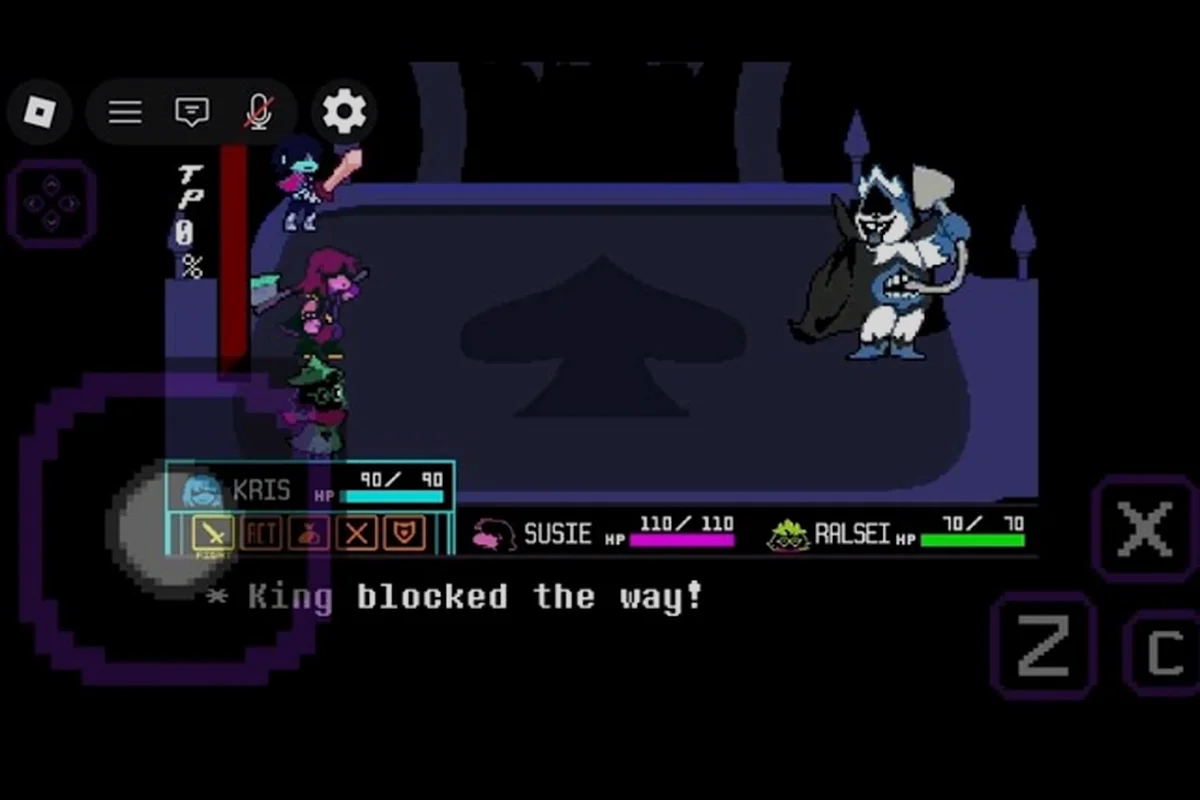
Understanding DELTARUNE Fight difficulty modes matters because the tier you select reshapes every boss encounter, not just the damage numbers. The Roblox experience launched on August 11, 2026, and has already pulled in more than 2.26 million visits, which means thousands of players are hitting the same wall: picking a tier that feels either trivial or impossible. Community videos show that higher tiers keep the same attack identities but tighten safe gaps and raise projectile density, so your first choice determines whether you learn clean movement or develop sloppy habits that crumble later.
Why Higher Tiers Compress Windows Instead Of Health
The core idea behind DELTARUNE Fight difficulty modes is that the game does not simply inflate health pools. According to community videos, the higher tiers preserve the same attack patterns while compressing the safe windows and layering more projectiles into each volley. That design choice means a player who masters the Standard tier is not automatically ready for Brutal, because the rhythm of every dodge changes even when the visual identity of an attack stays familiar.
The confirmed boss line-up so far includes Tenna, King, Pink, and Kaizo Knight, and each one behaves differently as the tier climbs. A wide, high-damage swing that feels generous on Easy can become a near-instant threat on Genocide because the telegraph shortens and the follow-up volley arrives sooner. Players report that the Soul — the heart-shaped cursor you steer during bullet phases — feels like the real difficulty lever, since tighter gaps demand more precise micro-adjustments rather than faster reactions alone.
| Difficulty Tier | What Changes | Who Should Pick It |
|---|---|---|
| Easy | Generous safe gaps, sparse projectile density, forgiving telegraphs | Players learning boss identities and basic Soul movement |
| Normal | Baseline rhythm, moderate volley density, standard telegraph windows | Players who want a fair first clear without hand-holding |
| Hard | Noticeably tighter gaps, denser volleys, shorter recovery after sweeps | Players comfortable with every confirmed boss pattern |
| Brutal | High-pressure phases, layered projectiles, minimal idle time | Players who can read overlapping attacks without panicking |
| Genocide | The hardest tier, near-continuous pressure, razor-thin safe windows | Players who treat each attempt as a movement lab |
This tier structure explains why the question of what difficulty to choose in DELTARUNE Fight has no single answer. A player who enjoys learning through repetition may thrive on Brutal from the start, while someone who wants to internalize each boss's identity first will get more value from Normal. The key is that every tier teaches a transferable skill, because the attack names and visual language stay consistent even as the execution window shrinks.
Easy and Normal: The Foundation Tiers for Learning Patterns
The Easy and Normal tiers in DELTARUNE Fight difficulty modes serve as the pattern library. Because the game publishes no official mechanic numbers, players rely on qualitative observation, and the community consensus from videos is that these two tiers give you enough breathing room to identify what each boss is actually doing. The Soul movement becomes second nature here, which matters because every higher tier assumes you already know how to steer through a bullet phase without looking at your own cursor.
One confirmed attack name appears in community footage: Rude Buster, which players report can be used to skip a final stretch of an encounter. On Easy, the value of Rude Buster is mostly educational, because you can afford to experiment with when to spend TP — the skill points used on attacks — without being punished for a mistimed activation. On Normal, that same experiment starts to carry real risk, since a wasted TP bar leaves you without a response when the next volley arrives.
| Learning Habit | Easy Tier Behavior | Normal Tier Behavior |
|---|---|---|
| Reading telegraphs | Long, obvious wind-ups | Standard wind-ups with less idle time |
| Soul micro-adjustments | Forgiving hitbox feel | Requires deliberate steering, not panic movement |
| TP spending | Safe experimentation | Must align with phase transitions |
| Attack recognition | Clear visual separation | Overlapping cues start to appear |
The transition from Easy to Normal is where most players should spend their first few sessions, because the delta between the two is small enough to feel like progress rather than punishment. According to community videos, the same boss can feel completely different on Normal simply because the safe gaps no longer allow you to reset your mental stack between attacks. That is the real lesson of the foundation tiers: difficulty in DELTARUNE Fight is about attention management, not raw reflexes.
Hard and Brutal: Where DELTARUNE Fight Hard Mode Starts to Punish
When players ask about DELTARUNE Fight hard mode, they are usually asking about the moment the game stops letting them recover. The Hard tier is the first point where overlapping projectiles become the default rather than the exception, and community footage shows that the same King encounter demands a different kind of focus when the screen-wide sweep arrives while a tracking volley is still active. This is where Soul positioning stops being a suggestion and becomes the entire fight.
The Brutal tier pushes that philosophy further. According to the community video capture of the King boss on Brutal and Genocide tiers, the higher tiers keep the same attack identities but tighten the safe gaps and raise projectile density rather than simply scaling health. That means a player who memorized the Normal version of an attack still has to relearn the timing, because the window they used to dodge through no longer exists in the same place. Brutal is the tier where bad habits from Easy become fatal, because there is no idle stretch long enough to reset a panicked input.
| Boss | What Hard Demands | What Brutal Adds |
|---|---|---|
| Tenna | Consistent gap reading during volley overlap | Minimal telegraph time before the next wave |
| King | Clean movement through the screen-wide sweep | Layered follow-ups that punish early dodges |
| Pink | Steady Soul control under pressure | Near-continuous projectile presence |
| Kaizo Knight | Precise positioning during high-damage swings | Razor-thin recovery windows after each attack |
Players who want a deeper comparison between the two highest tiers can look at the DELTARUNE Fight Brutal vs Genocide breakdown, which examines how the final two tiers diverge in practice. The short version is that Brutal still gives you identifiable phase breaks, while Genocide blurs those breaks into a single sustained pressure test. That distinction matters because it changes how you should practice: Brutal rewards phase-by-phase mastery, while Genocide rewards endurance and the ability to stay calm when the fight never lets up.
Genocide Mode: The Hardest Tier in DELTARUNE Fight
DELTARUNE Fight genocide mode is the current ceiling of the experience, and community videos treat it as a movement lab rather than a casual challenge. The defining trait of Genocide is not that individual attacks deal more damage, but that the safe gaps between attacks shrink to a fraction of what they were on Normal. Players report that the Soul cursor feels like the only stable element on screen, because every other visual is either a projectile or a telegraph that demands immediate attention.
The Tenna fight on Genocide demonstrates this clearly in community footage. The attack identities remain recognizable, but the density of projectiles means you are often reading two or three overlapping cues at once. That is why the tier punishes reactive play so hard: if you wait to see the full attack before moving, you are already too late. Genocide forces you to act on the earliest possible telegraph, which is a skill that only develops after you have internalized the pattern library from the lower tiers.
| Genocide Challenge | What It Tests | Which Habit Helps |
|---|---|---|
| Overlapping volleys | Multi-cue reading under pressure | Studying one boss at a time on Normal first |
| Razor-thin safe gaps | Precise Soul micro-adjustments | Deliberate steering instead of panic movement |
| Near-continuous pressure | Endurance and mental stack management | Short, focused practice sessions |
| Minimal recovery windows | TP timing under stress | Saving Rude Buster for the final stretch |
The relationship between Brutal and Genocide is worth understanding before you commit, and the DELTARUNE Fight difficulty differences guide walks through how each tier changes the same encounter. For most players, Genocide is not a first-week goal but a long-term project, because the tier assumes you have already converted every boss pattern into muscle memory. That is why the climb through Easy, Normal, and Hard is not wasted time — it is the only reliable path to surviving the hardest tier without developing a panic response that Genocide will exploit.
What Difficulty to Choose in DELTARUNE Fight: A Decision Framework
The question of what difficulty to choose in DELTARUNE Fight depends on two things: your current pattern knowledge and your tolerance for repetition. Because the game does not publish mechanic numbers, the best decision framework is qualitative, and it starts with an honest assessment of how well you can read a boss without seeing the full telegraph. If you are still reacting to attacks after they start, Easy or Normal is the right place to build that foundation.
Players who have already cleared the confirmed bosses on Normal should consider Hard as their default training tier, because it introduces the overlapping pressure that defines the upper half of the difficulty curve. Brutal makes sense once Hard feels predictable, and Genocide is the tier you pick when you want to test whether your movement is clean enough to survive sustained pressure. The key insight from community videos is that jumping straight to Genocide teaches you to survive through luck, not skill, because the tier is too dense to learn from while you are still struggling to read basic cues.
| Player Profile | Recommended Starting Tier | Why |
|---|---|---|
| New to the game | Easy | Builds pattern recognition without punishment |
| Cleared a few bosses | Normal | Fair challenge that exposes weak habits |
| Comfortable with all confirmed bosses | Hard | Introduces overlap without full pressure |
| Consistent on Hard | Brutal | Tests phase-by-phase mastery under stress |
| Mastered Brutal | Genocide | The final endurance and precision check |
The DELTARUNE Fight challenge modes overview covers how difficulty settings interact with other run modifiers, which is useful if you want to customize the experience beyond the standard tier ladder. For most players, the best approach is to treat each tier as a separate skill certification: clear every confirmed boss on Normal before touching Hard, clear Hard before Brutal, and only attempt Genocide when the lower tiers feel genuinely easy. That progression respects the design philosophy that community footage reveals — difficulty in DELTARUNE Fight is about attention and movement quality, not stat inflation.
Frequently Asked Questions
What is the easiest DELTARUNE Fight difficulty mode?
The Easy tier is the most forgiving starting point, with generous safe gaps and sparse projectile density. According to community videos, it preserves every boss's attack identity while giving you enough breathing room to learn the Soul cursor movement and basic telegraph reading without being punished for hesitation.
Is DELTARUNE Fight hard mode worth playing?
Yes, because Hard is where overlapping projectiles become the default and the game stops letting you reset your mental stack between attacks. Players report that clearing the confirmed bosses on Hard is the best preparation for Brutal, since it introduces the multi-cue reading that defines the upper tiers.
How do I unlock DELTARUNE Fight genocide mode?
Community footage shows Genocide as a selectable tier rather than a hidden unlock, but the game publishes no official documentation on tier availability. As of the September 2026 build, players report that the tier is accessible from the difficulty selection screen, though the exact menu flow may vary by update.
What is the difference between Brutal and Genocide in DELTARUNE Fight?
According to community videos, Brutal keeps identifiable phase breaks while Genocide blurs them into a near-continuous pressure test. Both tiers tighten safe gaps and raise projectile density, but Genocide demands endurance and the ability to act on the earliest telegraph rather than waiting to see the full attack.
Which DELTARUNE Fight difficulty should I pick first?
Start with Normal if you have any action-game experience, because it delivers a fair first clear without hand-holding. New players should begin on Easy to build pattern recognition, while anyone who has already cleared the confirmed bosses on Normal can jump to Hard for a meaningful step up in pressure.