
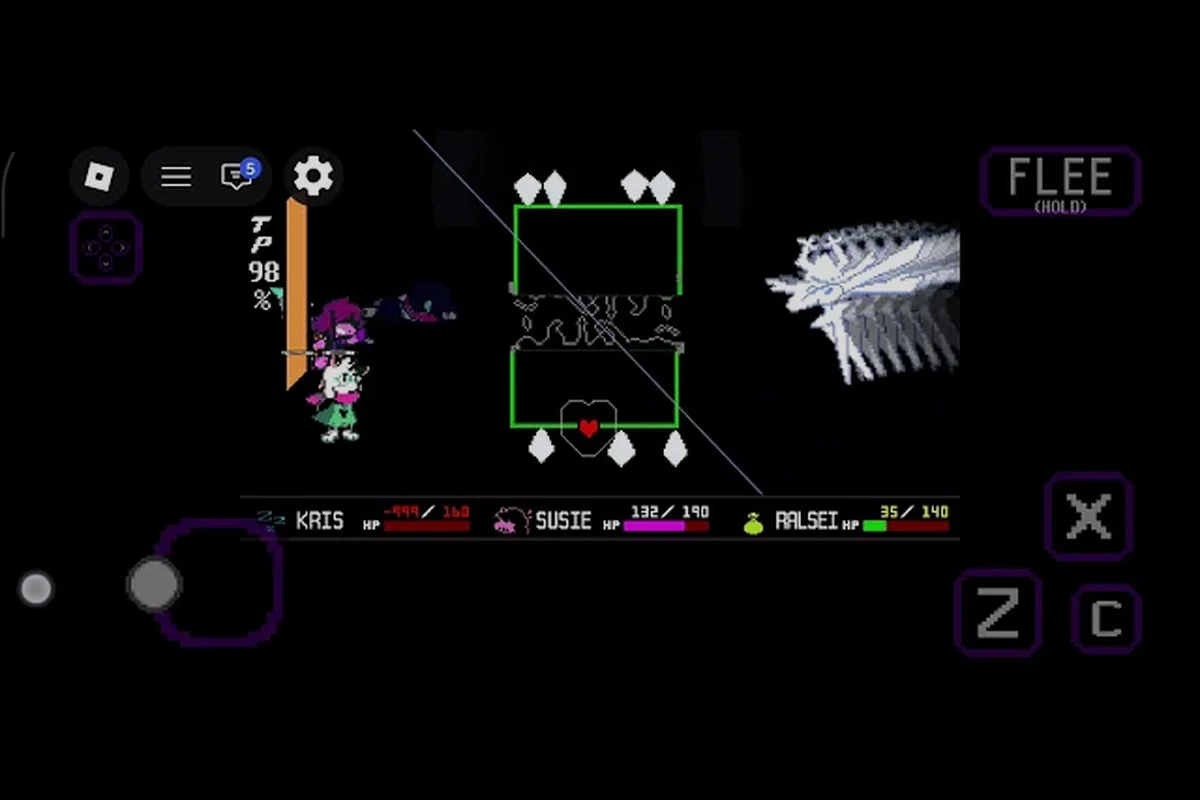
The real DELTARUNE Fight difficulty differences are not about bigger health bars; they are about how much the game asks you to read, react, and stay clean under pressure. According to community videos, the higher tiers keep the same attack identities but tighten safe gaps and raise projectile density, which means your habits matter more than your raw damage output. Understanding how Brutal and Genocide reshape each confirmed boss is the fastest way to stop plateauing. p the same attack identities but tighten safe gaps and raise projectile density, which means your habits matter more than your raw damage output. Understanding how Brutal and Genocide reshape each confirmed boss is the fastest way to stop plateauing, and the Deltarune Fight Challenge Modes breakdown lays out exactly which per-boss changes demand reworked positioning before you waste attempts on muscle memory that no longer applies.
How the Confirmed Bosses Expose Tier Pressure
The confirmed line-up so far includes Tenna, King, Pink, and Kaizo Knight, and each fight teaches a different lesson about what the harder tiers actually punish. Because the game publishes no official mechanic numbers, players have to read the tier differences through behavior rather than stats, which is why community recordings are so useful for spotting patterns. A community recording titled DELTARUNE FIGHT | KAIZO KNIGHT MODIFIER (STATUS NON BEATEN BY ME) posted by HΩpe shows how the Kaizo Knight modifier pushes the fight into a long, high-pressure stretch where a single missed read can end the run.
| Boss | What Standard Teaches | What Brutal and Genocide Add |
|---|---|---|
| Tenna | Basic bullet weaving and Soul control | Tighter safe gaps and denser projectile spreads |
| King | Reading wide, telegraphed swings | Faster follow-ups and less recovery room |
| Pink | Tracking volleys and repositioning | More aggressive tracking with shorter reaction windows |
| Kaizo Knight | Endurance and clean movement | A long stretch that punishes every wasted TP |
The table above is a qualitative read based on community reports, not a datamined stat sheet, because the developer has not released any numeric values. What players consistently describe is that the hardest tier does not introduce entirely new attacks; it compresses the space you have to solve the attacks you already know. That compression is the core of the DELTARUNE Fight difficulty differences, and it is why practicing on Standard still transfers upward.
How Brutal Punishes Small Positional Errors
Brutal is the first tier where the game stops forgiving small positioning mistakes, and community recordings of the Tenna encounter show the same attack identities returning with less room to breathe. The Soul cursor remains your only defensive tool, but the margin for error shrinks because projectiles arrive in denser clusters and the safe gaps close faster. Players who try to rely on reaction speed alone tend to burn through their TP on panic attacks, which leaves them without resources when the fight enters its final phase.
Reading Density Instead of Damage
The most important habit on Brutal is learning to read projectile density as a signal rather than a threat. When the screen fills with a wide, high-damage sweep, the correct response is usually to move early toward the gap that is already opening, not to wait for the projectile to reach you. Community reports describe this as the difference between surviving a long stretch and getting clipped by the third or fourth wave, because the tier punishes hesitation more than it punishes low damage.
The TP Discipline Shift
On Standard, you can often spend TP freely and recover before the next major phase, but Brutal demands a more conservative rhythm. Because every attack you throw costs skill points that could have been saved for a safer window, the tier rewards players who hold their resources until the boss commits to a long recovery animation. The Rude Buster attack name appears in community videos as one of the tools players use to skip a final-phase attack, which suggests that saving TP for a burst can shorten the most dangerous part of a fight.
How Genocide Reshapes the Same Fights
Genocide is the hardest tier currently documented in community videos, and its identity is not a new moveset but a relentless version of the existing one. The Tenna fight recorded on both Brutal and Genocide shows the higher tier keeping the same attack identities while raising projectile density and tightening the safe gaps even further, which means your positioning has to be proactive rather than reactive. Players who have cleared Brutal often describe Genocide as the point where the game stops giving you a comfortable reset between waves.
The Long-Stretch Endurance Check
The biggest shift on Genocide is the length of the high-pressure phase, because the boss stays aggressive for a longer stretch and gives you fewer clean openings to spend TP. Community reports emphasize that the final phase becomes a test of whether you can maintain clean movement while your resources are low, which is a very different skill from learning the attack patterns in the first place. The Kaizo Knight modifier recording shows a similar pattern, where the fight extends into a status that the uploader marked as not beaten, suggesting that the endurance check is the real wall for most players.
When Genocide Stops Being About Reaction
At some point on Genocide, the fight stops being about reacting to individual projectiles and becomes about managing the space between waves. Because the safe gaps are so short, you have to commit to a movement path before the attack fully spawns, which means reading the boss's wind-up rather than the projectile itself. This is the skill that separates players who can clear Brutal from players who can survive Genocide, and it is why the tier is often described as a different game even though the attacks look familiar.
How Pacifist Searches Fit the Tier Discussion
The "true pacifist" search phrase and the "pacifist run" search phrase come up often when players look for DELTARUNE Fight difficulty differences, but this Roblox boss-rush does not confirm a formal pacifist route. There is no SPARE menu, no route flag saved to a slot, and no party member joining mid-run, which means the original game's pacifist framework does not map directly onto this experience. What players are usually looking for is a lower-pressure way to learn the fights, and that is better served by choosing Standard and focusing on clean movement.
Why the Original Game's Framework Does Not Transfer
In the original Deltarune, Kris, Susie, Ralsei, and Noelle are characters with their own roles, but this Roblox game does not confirm them as playable fighters, and it does not carry over the original game's route structure. The search for a "true pacifist" run in this game is therefore a search for something the game does not currently offer, at least as of the September 2026 build. Players who want a gentler learning curve should treat Standard as the closest thing to a low-stakes run, because it lets you observe every attack without the density pressure of the higher tiers.
What the Search Phrase Actually Reveals
The popularity of the "pacifist run" search phrase reveals that many players want to understand the game's structure before committing to the hardest difficulty, which is a reasonable instinct. Because the game has no chapters and no inventory, the only real progression is your own ability to read each confirmed boss, and that progression is visible across every tier. If you are searching for a pacifist-style experience, the practical answer is to run Standard repeatedly until the attack patterns become automatic, then climb into Brutal and Genocide with that foundation.
Why Tier Selection Is Not A Locked Chain
The question of how to unlock Brutal and Genocide is one of the most common searches around this game, and the community answer is simpler than many players expect. According to community videos, the difficulty tiers are named Standard, Brutal, and Genocide, and they are selectable rather than hidden behind a long unlock chain. Because the game publishes no official unlock steps, the safest approach is to check the difficulty selection screen on the official Roblox page and look for the tier names directly.
| Tier | How Players Report Accessing It | What to Expect |
|---|---|---|
| Standard | Selectable from the start | Full attack patterns with forgiving gaps |
| Brutal | Selectable after learning the basics | Denser projectiles and tighter safe gaps |
| Genocide | Selectable as the hardest tier | Long high-pressure stretches with minimal recovery |
The table above reflects community reports rather than official documentation, because the developer has not released a written unlock guide. If you are looking for how to unlock Brutal, the most reliable method is to load the game and check the available tier options, since the community videos show the tier names appearing in the selection flow. The same applies to how to unlock Genocide: there is no hidden flag or special condition reported, just a harder tier that expects you to already understand the fights.
The Selection Screen Is the Real Gate
Players sometimes assume that the hardest difficulty must be gated behind a clear of the previous tier, but community reports do not support that assumption. The tier names appear as selectable options, which means the real gate is your own readiness rather than a technical unlock. If you can already read the boss wind-ups and manage your TP, you are probably ready to select Brutal or Genocide directly, but if you are still reacting to projectiles instead of anticipating them, the higher tiers will feel overwhelming.
What to Practice Before Climbing
Before you select the hardest difficulty, spend time on Standard learning the Soul movement and the rhythm of each confirmed boss. Because the higher tiers keep the same attack identities, every clean run on Standard is direct preparation for Brutal and Genocide, and the only new variable is the density and the length of the high-pressure phase. Players who rush into Genocide without that foundation often describe the experience as unfair, when the real issue is that they skipped the tier that teaches the necessary reads.
How the Kaizo Knight Modifier Changes the Climb
The Kaizo Knight fight is the clearest example of how a modifier can push an already hard boss into a different category of endurance, and the community recording shows the uploader marking the status as not beaten. Because the modifier extends the fight into a long stretch with minimal recovery, it tests the same skills as Genocide but with even less room for error. The recording titled DELTARUNE FIGHT | KAIZO KNIGHT MODIFIER (STATUS NON BEATEN BY ME) is a plain community capture, not a guide or official breakdown, and it shows the fight's pressure without any commentary on hidden mechanics.
| Observation from the recording | What it shows about the Kaizo Knight modifier |
|---|---|
| The uploader marks the fight as not beaten | The modifier pushes the encounter beyond the uploader's current clear, so the climb remains open as of the September 2026 build |
| The fight runs as a long stretch with minimal recovery | The modifier extends the same endurance test seen in Genocide, but with even less room to recover between pressure windows |
| The capture is a plain community recording, not a guide or official breakdown | There is no commentary on hidden mechanics, so only what is visible in the recording can be treated as observed behavior |
| The recording title names only the Kaizo Knight modifier | The modifier is presented as its own difficulty condition, separate from the Standard, Brutal, and Genocide tier names reported in community videos |
What the Recording Shows About Pressure
The recording makes one thing clear: the Kaizo Knight modifier does not need to invent new attacks to be difficult, because the existing patterns become overwhelming when the safe gaps shrink and the fight refuses to let up. Players watching the capture can see the Soul cursor weaving through dense projectile spreads while the boss keeps the pressure on, which is the same skill Genocide demands but sustained for a longer stretch. This is why the modifier is often discussed alongside the hardest tier, even though it is a separate challenge.
Why the Modifier Is a Separate Skill Check
The Kaizo Knight modifier is not simply a harder version of the base fight; it is a check of whether you can maintain clean movement for an extended period without a single lapse. Because the uploader marked the status as not beaten, the recording also serves as a reminder that the hardest content in this game is not always about damage output, but about consistency under pressure. If you are climbing toward Genocide, spending time on the Kaizo Knight modifier is a useful intermediate step, because it forces the same endurance habits in a focused setting.
Frequently Asked Questions
What are the main DELTARUNE Fight difficulty differences?
The main DELTARUNE Fight difficulty differences come down to projectile density, safe-gap timing, and the length of high-pressure phases. According to community videos, Standard keeps the gaps forgiving, Brutal tightens them, and Genocide pushes the fight into a long stretch where clean movement matters more than raw damage output.
What is the hardest difficulty in DELTARUNE Fight?
Genocide is the hardest tier currently documented in community videos, because it keeps the same attack identities as Brutal but raises projectile density and shortens the safe gaps even further. The Kaizo Knight modifier is a separate challenge that can feel even harder, but it is not a standard tier.
How do I unlock the Genocide tier?
Community reports suggest the Genocide tier is selectable from the difficulty screen rather than gated behind a hidden unlock condition. Because the developer has not published official unlock steps, the most reliable method is to load the game and check the available tier options directly.
Is there a pacifist run in DELTARUNE Fight?
No formal pacifist route is confirmed in this Roblox boss-rush, because there is no SPARE menu, no route flag, and no party member joining mid-run. The "pacifist run" search phrase usually reflects a desire for a lower-pressure learning experience, which Standard provides.
Does the original Deltarune framework apply to this game?
The original Deltarune's characters and route structure do not transfer directly, because this game does not confirm Kris, Susie, Ralsei, or Noelle as playable fighters. The Roblox version is a boss-rush with no chapters, no inventory, and no route flags saved to a slot.