
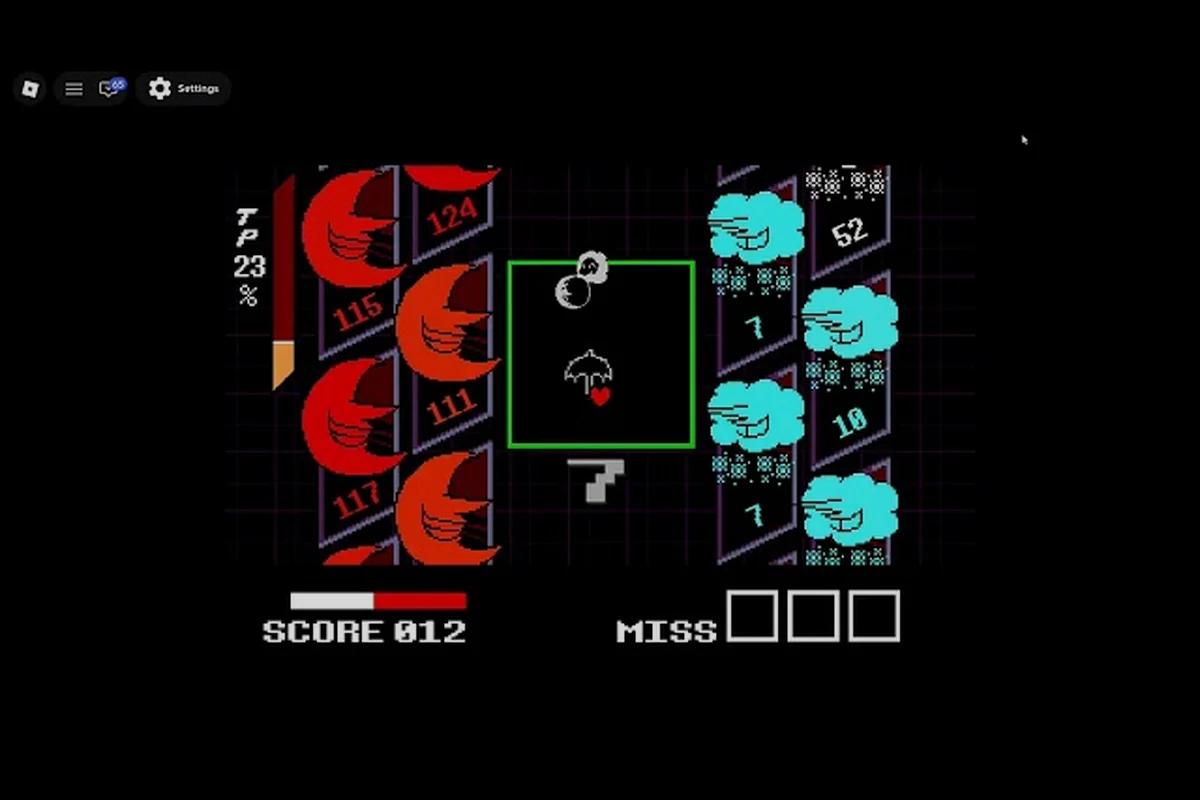
Understanding DELTARUNE Fight action commands transforms a chaotic boss rush into a readable, repeatable combat loop. The Roblox battleground built by ItsIsaacIO strips away the original game's menu-driven turns and replaces them with real-time decision pressure, which means every input matters when a screen-wide sweep is heading toward your Soul. Players who treat the command layer as an afterthought burn through healing items early and die to the same telegraphed volley twice, while players who read the fight state correctly turn Rude Buster windows into clean damage phases. This guide breaks down how the Fight, Act, Items, and Mercy layers actually behave in the September 2026 build, based on community video captures and player reports rather than official patch notes, because the developer publishes no mechanic numbers anywhere.
How the Fight Command Layer Works in Practice
The Fight command is not a single button press that plays out a canned animation. In DELTARUNE Fight, the Fight layer is a commitment: you spend TP, you accept a positioning risk, and you open a damage window that the boss can punish if you mistime the input. Community videos of the confirmed bosses — Tenna, King, Pink, and Kaizo Knight — show the same underlying rhythm. You steer the Soul through a bullet phase, wait for the boss to expose a recovery gap, then trigger the Fight action while the cursor is aligned with the vulnerable zone.
What makes this different from the original Deltarune is the absence of a turn-based FIGHT / ACT / ITEM / MERCY menu. The original game pauses the action and lets you browse four options, but this Roblox adaptation runs everything in real time. According to community videos, the command layer here is mapped to context-sensitive keys: Z confirms, X goes back, and C triggers the context-dependent action. That third key is the one most new players ignore, and it is also the key that unlocks the deeper parts of the Fight command set.
The practical loop looks like this:
| Phase | What the player does | What the boss does | Common mistake |
|---|---|---|---|
| Bullet phase | Steers the Soul through projectile gaps | Fires a tracking volley or screen-wide sweep | Dodging too early and drifting into the next wave |
| Recovery gap | Moves toward the boss and lines up the cursor | Briefly stops attacking | Waiting too long and losing the damage window |
| Fight input | Presses the confirm key to spend TP and strike | Takes damage if the input lands cleanly | Mashing the key and triggering a whiffed swing |
| Reset | Returns to the Soul and watches the next telegraph | Starts the next attack cycle | Standing still instead of repositioning |
The Fight menu in this game is therefore less of a menu and more of a state you enter when you decide to commit damage. Players who describe it as a menu are usually referring to the mental checklist they run before pressing the confirm key: is the boss in recovery, is the Soul clear of residual projectiles, and is there enough TP to make the swing worth the risk. If any of those checks fails, the correct play is to keep dodging and wait for the next cycle.
Reading the Boss Recovery Window
Every confirmed boss in the September 2026 build telegraphs its recovery window differently, and learning those tells is the core skill behind the Fight command. Tenna tends to pause after a screen-filling attack, leaving a short window where the television-themed boss stops emitting projectiles. King often commits to a wide, high-damage swing that leaves his flank open for a moment. Pink and Kaizo Knight both demand faster reads, because their recovery gaps are shorter and their follow-up attacks come sooner.
The key habit is to watch the boss's movement pattern rather than the Soul during the transition. When the boss stops tracking your position and begins a fixed animation, that is the signal to move in. Players who keep their eyes locked on the Soul miss the tell entirely and arrive at the damage window a beat too late. Community reports describe this as the single biggest gap between players who clear the hardest difficulty tier and players who stall on the default Standard tier.
TP Management Before the Fight Input
TP is the resource that gates every Fight command, and it behaves differently from the original game's menu-driven system. In the original Deltarune, TP accumulates as a percentage and can be spent on specific spells or abilities. Here, according to community videos, TP fills through successful dodges and phase transitions, then empties when you commit to a Fight action. The exact cost is not published, but the qualitative pattern is consistent: a full TP bar supports a heavier commitment, while a partial bar forces a lighter, riskier swing.
The practical rule is to bank TP during the early bullet phases and spend it only when the boss enters a confirmed recovery gap. Players who spend TP on every available window find themselves empty when the hardest phase arrives, which is exactly when a charged Fight command matters most. The how to charge attacks question is really a TP discipline question: charge by surviving, then release by committing at the right moment.
Act, Items, and Mercy: The Non-Damage Command Layer
The Act menu in DELTARUNE Fight is the most misunderstood part of the command set, largely because the original game's Act option let you interact with enemies through dialogue and unique actions. This Roblox adaptation does not replicate that system. Community videos show no evidence of a dialogue-driven Act layer, no spare conditions tied to specific Act choices, and no party members joining mid-run to expand the Act options. What players call the Act menu here is closer to a stance or behavior toggle: it changes how the boss responds to your positioning without dealing direct damage.
Because the developer publishes no official mechanic breakdown, everything about the Act layer comes from player observation. The consistent report is that Act-like behavior emerges from how you move and when you choose not to attack. Holding back during a recovery window can bait certain bosses into a longer, more punishable animation, which functions as a soft Act command even though no menu label exists. This is a critical distinction for players coming from the original game, because expecting a literal Act menu leads to confusion and wasted inputs.
The Items in battle question is more concrete. Players can use healing and utility items during combat, but the timing is constrained by the same real-time pressure that governs everything else. You cannot pause to browse an inventory while a tracking volley is crossing the arena, so item use becomes a positioning decision rather than a menu decision. The how to use items answer is therefore: clear the immediate projectile threat, create distance, then trigger the item through the context-sensitive key while the boss is between attacks.
| Command layer | What it actually does in this Roblox build | Best time to use it | Risk if mistimed |
|---|---|---|---|
| Fight | Spends TP to deal damage during a recovery gap | Immediately after a boss telegraph ends | Whiffed swing leaves you open to the next volley |
| Act-like behavior | Changes boss response through movement and non-attack positioning | During early phases to learn patterns | Wasted time if the boss ignores the bait |
| Items | Restores health or applies a utility effect | Between attack cycles with distance from the boss | Interrupted use wastes the item and leaves you vulnerable |
| Mercy | Ends the encounter without a kill condition | Only if the boss enters a spare-eligible state | No Mercy option exists for most confirmed bosses |
The Mercy layer deserves special attention because it is the most frequently misreported command. In the original Deltarune, Mercy allowed you to spare enemies once their name turned yellow, and it was a core part of the pacifist approach. This Roblox boss rush does not confirm a Mercy menu or a spare condition for any of the four confirmed bosses. According to community videos, encounters end when the boss's health pool is depleted, not through a spare trigger. Players who hold back expecting a Mercy window simply extend the fight and take more damage.
Why the Original Menu System Does Not Transfer
The original Deltarune's FIGHT / ACT / ITEM / MERCY menu is a turn-based structure that pauses combat and gives the player unlimited time to choose. That structure cannot survive a real-time boss rush, which is why this adaptation rebuilds the command layer around positioning, timing, and resource discipline instead. Kris, Susie, Ralsei, and Noelle exist in the original game as party members with distinct abilities, but this Roblox game does not confirm them as playable fighters, and no skill tables or cooldowns exist for them here.
This matters because players arrive with muscle memory from the original game and expect the same menu logic to apply. The transition is jarring: instead of selecting Act and watching a scripted interaction, you are reading boss animations and committing to real-time inputs. The faster you accept that the command layer is behavioral rather than menu-driven, the sooner you stop fighting the game's actual systems and start exploiting its recovery windows. A deeper look at the underlying battle flow is covered in the DELTARUNE Fight combat guide, which maps the full parry and dodge loop.
Charging Attacks and Combo Windows
The how to charge attacks question is the most searched long-tail query around DELTARUNE Fight action commands, and the answer is more subtle than holding a button. Community videos show no dedicated charge meter or charge animation in the way a traditional fighting game would. Instead, charging emerges from the interaction between TP accumulation and the timing of your Fight input. When you survive a full bullet phase without spending TP, your next Fight command lands with noticeably more impact, which players describe as a charged attack.
This creates a natural risk-reward curve. The longer you hold TP, the harder your next commitment hits, but the longer you also go without dealing damage, which extends the fight and increases the number of bullet phases you must survive. The optimal rhythm varies by boss. Against King, whose recovery gaps are longer and more readable, banking TP for a heavy charged swing is often correct. Against Pink, whose faster cycle punishes hesitation, lighter and more frequent Fight inputs keep pressure up while you chip away at the health pool.
Combo attacks follow a similar emergent logic. There is no combo counter or on-screen multiplier in the September 2026 build, according to community videos. What players call combos are sequences of Fight inputs landed in rapid succession during an extended recovery window. When a boss staggers or enters a longer vulnerable state, you can chain multiple Fight commands together, and each successive hit appears to land with more force than the last. The exact scaling is not published, but the qualitative pattern is consistent across player reports.
| Boss | Recovery window style | Best charge strategy | Combo potential |
|---|---|---|---|
| Tenna | Long pause after screen-wide attacks | Bank TP through the sweep, release one heavy swing | Moderate — one or two follow-ups before the next volley |
| King | Wide swing leaves flank open | Charge during the swing telegraph, strike as it ends | High — extended stagger allows chained inputs |
| Pink | Short, fast recovery gaps | Prefer lighter frequent swings over heavy charges | Low — the window closes before a second input |
| Kaizo Knight | Punishing but readable on the hardest tier | Full TP bank, then commit during the longest tell | Moderate — timing is tighter but the payoff is larger |
The Fight fight menu phrasing that appears in search queries reflects a common confusion: players think there is a submenu inside the Fight command itself. In practice, the Fight layer has no submenu. It is a single commitment that scales with your TP bank and your timing. The depth comes from the decision layer around it — when to charge, when to chain, and when to reset — not from nested options. If you are looking for a literal menu tree, you will not find one, and that is by design.
Adapting Your Rotation To Each Boss Phase
A repeatable rotation is what separates players who clear the hardest difficulty tier from those who stall on Standard. The rotation is not a fixed sequence of buttons but a decision loop that adapts to the boss's current phase. Start by identifying the boss's longest telegraph, because that is the attack you can most reliably survive while banking TP. Then commit your charged Fight input only after that telegraph ends, and immediately reset to the Soul for the next bullet phase.
The rotation becomes second nature after a few runs, but the first step is always observation. Spend an entire attempt without attacking, just dodging and watching how the boss cycles through its attack patterns. According to community videos, players who do this once learn more about the fight than players who mash Fight for ten attempts. The observation run reveals which recovery gaps are real and which are bait, and that knowledge is what makes the combo attacks question answerable: you can only chain inputs when you know exactly how long the window stays open.
Difficulty Tiers and Command Pressure
DELTARUNE Fight's difficulty tiers change how the command layer feels without changing what the commands do. The community-reported tier names are Standard, Brutal, and Genocide, and each one compresses the timing windows further. On Standard, recovery gaps are generous enough that a player can hesitate for a beat and still land the Fight input. On Brutal, that same hesitation causes a whiff. On Genocide, the hardest tier, the window is so tight that only a pre-planned input lands cleanly.
This scaling is why the command layer matters more at higher tiers. The Fight, Act-like behavior, Items, and Mercy decisions do not change, but the cost of a wrong decision multiplies. A wasted item on Standard is a minor setback; a wasted item on Genocide can end the run, because the next bullet phase is denser and the next recovery gap is shorter. Players who climb the tiers learn to treat every command as a resource commitment rather than a free action.
The items in battle question becomes especially sharp on the harder tiers. Healing items are limited, and the window to use them shrinks as the boss speeds up. The correct habit is to heal only during the longest recovery gap, never during a bullet phase, and never when the boss is mid-telegraph. Players who panic-heal during a tracking volley lose the item, take the hit, and enter the next phase with no recovery option left. The attack guide covers the bullet patterns and healing timing in more detail.
What the September 2026 Build Confirms
As of the September 2026 build, the confirmed boss line-up includes Tenna, King, Pink, and Kaizo Knight, and no closed roster claim is safe because the developer may add more. The game launched on August 11, 2026, and has already drawn over 2.26M visits on the official Roblox page, with 30K+ favorites and about 8,980 likes. The server cap is 15 players, which means the boss rush is a small-group or solo experience rather than a massive multiplayer arena.
Those numbers matter because they explain the design pressure behind the command layer. A solo or small-group boss rush cannot rely on party composition or role specialization to carry weak individual play. Every player in the arena has to read the fight state correctly, manage TP, and commit Fight inputs at the right moment. The command layer is the entire skill expression, and the difficulty tiers exist to stretch that skill further rather than to introduce new mechanics.
Frequently Asked Questions
What are the DELTARUNE Fight action commands?
The command layer includes Fight, Act-like behavior, Items, and Mercy, but they are not menu-driven like the original game. Fight spends TP to deal damage during recovery gaps, Act-like behavior emerges from movement and non-attack positioning, Items restore health between attack cycles, and Mercy has no confirmed spare condition for the four known bosses.
How do I use items in battle?
Clear the immediate projectile threat first, create distance from the boss, then trigger the item through the context-sensitive key while the boss is between attacks. Never use items during a bullet phase or mid-telegraph, because an interrupted use wastes the item and leaves you vulnerable to the next volley.
How do I charge attacks in DELTARUNE Fight?
Charging emerges from TP accumulation rather than a dedicated charge button. Survive a full bullet phase without spending TP, and your next Fight command lands with noticeably more impact. The longer you bank TP, the harder the swing hits, but you also extend the fight by delaying damage.
Can I chain combo attacks?
Yes, but only during extended recovery windows. When a boss staggers or enters a longer vulnerable state, you can chain multiple Fight inputs in rapid succession, and each successive hit appears to land with more force. The exact scaling is not published, but the pattern is consistent across community videos.
Why does the Act menu feel different from the original game?
The original Deltarune's Act option let you interact with enemies through dialogue and unique actions, but this adaptation does not replicate that system. Community videos show no dialogue-driven Act layer, no spare conditions tied to Act choices, and no party members joining mid-run to expand the options.
Mastering DELTARUNE Fight action commands is a discipline of reading, not memorizing. The Fight layer rewards TP discipline and recovery-window recognition, the Act-like behavior rewards patient observation, Items reward positioning awareness, and Mercy simply does not exist in the way original-game players expect. The confirmed bosses — Tenna, King, Pink, and Kaizo Knight — all punish the same mistakes: mashing inputs, panic-healing, and spending TP on every available window. Community video captures like the tenna fight in deltarune fight on roblox recording show the full command loop in action, and the pattern holds across every difficulty tier. Learn the tells, bank the TP, commit at the right moment, and the boss rush stops feeling like chaos and starts feeling like a rhythm you can repeat.