
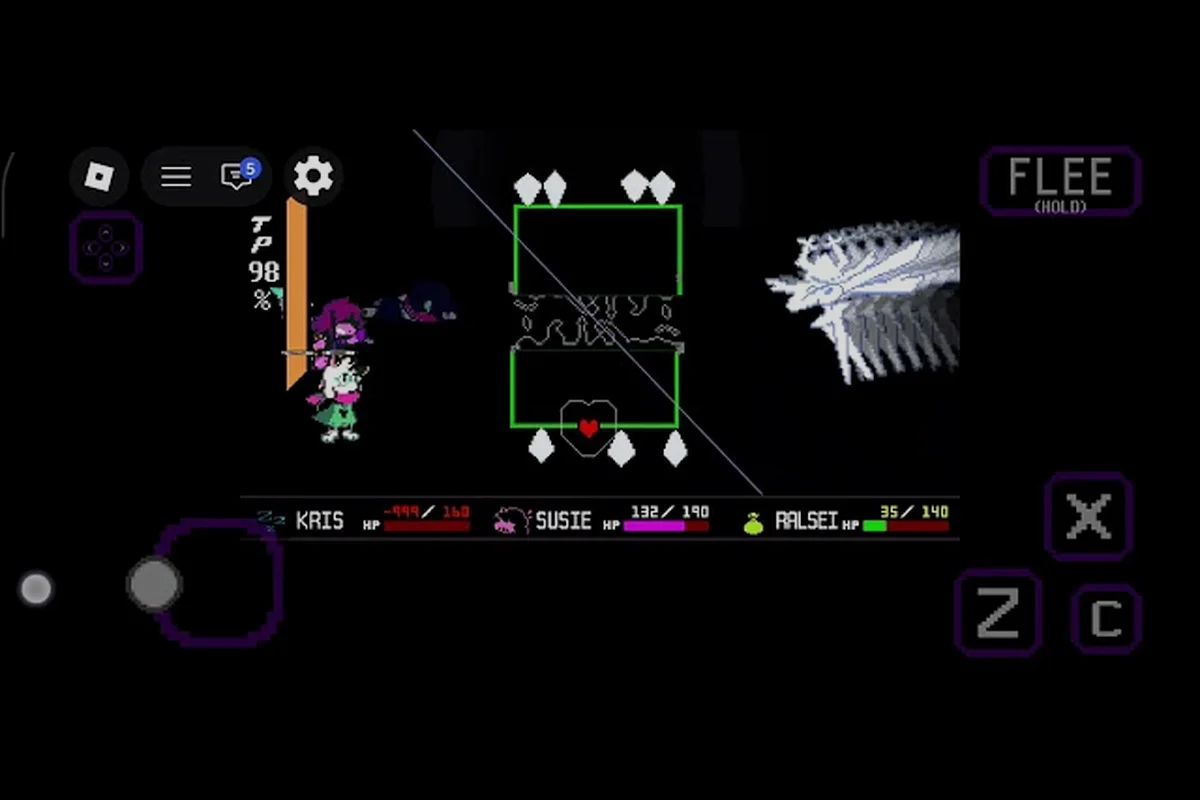
A DELTARUNE Fight 100 percent run is not about raw damage output—it is about surviving the longest, most punishing sequences while managing limited resources. As of the September 2026 build, the confirmed line-up so far includes Tenna, King, Pink, and Kaizo Knight, each demanding a different survival habit. This guide breaks down the gauntlet order, extreme mode habits, and the skill-ceiling techniques that separate a clean full clear from a frustrating reset.
Mapping the Full Gauntlet Route
Before attempting a DELTARUNE Fight 100 percent run, you need a route that respects the escalating pressure model. Players report that the four confirmed bosses do not punish the same skills equally: one tests spatial awareness, another tests patience under tracking projectiles, and Kaizo Knight tests whether you can hold focus through a long, high-pressure phase without burning resources too early.
The key insight from community recordings is that survival phases matter more than damage output. A player who deals consistent damage but dies to a late tracking volley loses the run, while a player who conserves TP and waits for clean windows clears the same fight more reliably. This is why the gauntlet order should prioritize fights that warm up your movement before fights that demand long endurance.
| Boss | Primary Demand | Survival Habit |
|---|---|---|
| Tenna | Reading fast, telegraphed swings | Keep the Soul near the arena edge, then cut inward during the recovery window |
| King | Managing wide, high-damage swings | Pre-position before the swing starts, not after the telegraph appears |
| Pink | Tracking multi-directional pressure | Use short, deliberate taps instead of long dashes to avoid overcorrecting |
| Kaizo Knight | Enduring a long, high-pressure phase | Save TP for the late-phase skip instead of spending it on early damage |
This table is not a closed roster claim—it reflects the confirmed line-up so far as of the September 2026 build. Community videos suggest additional encounters may exist, but treating unverified bosses as part of a 100 percent route is a fast way to waste attempts on content that may not count toward completion.
Extreme Mode Survival Habits
Extreme mode in DELTARUNE Fight is less about memorizing a single pattern and more about building habits that hold up when the pressure spikes. The difficulty tier names Standard, Brutal, and Genocide come from community videos, and players report that the jump from Brutal to Genocide changes the pace of every fight rather than simply adding more health.
The TP Discipline Habit
TP is the skill resource you spend on attacks like Rude Buster, and the single most important habit for a 100 percent run is learning when not to spend it. Community recordings of the Kaizo Knight encounter show that late attack segments can be skipped by spending TP on Rude Buster instead of playing them out. This means every early TP spent on marginal damage is a resource you no longer have when the skip window appears.
The habit to build is simple: during the first half of any boss fight, use only movement and positioning to survive. Treat TP as a panic button for the final stretch, not a damage tool for the opening. Players who follow this rule report far fewer deaths to late-phase tracking volleys because they always have the resource to skip the most dangerous segment.
The Soul Positioning Habit
The Soul is the heart-shaped cursor you steer during bullet phases, and its position determines whether you react to attacks or get cornered by them. A common mistake in extreme mode is hugging the bottom of the arena, which leaves no room to retreat when a wide, high-damage swing covers the lower half.
Instead, keep the Soul slightly off-center, biased toward the side with more open space. This gives you a retreat path when a tracking volley starts, and it makes the recovery window after a telegraphed swing easier to exploit. The habit is not about perfect dodging—it is about never letting a single mistake cascade into a corner trap.
The Boss Gauntlet Order That Works
The order of your DELTARUNE Fight boss gauntlet matters because each fight teaches a skill that the next fight builds on. Players report that starting with the fight that demands the most movement and ending with the fight that demands the most endurance produces the most consistent full clears.
Recommended Gauntlet Sequence
-
Tenna first: The fast, telegraphed swings force you to read attack startups early, which is the foundation for every later fight.
-
King second: The wide, high-damage swings punish poor pre-positioning, so you learn to move before the telegraph instead of reacting to it.
-
Pink third: The multi-directional pressure tests whether your movement habits hold up when you cannot focus on a single threat.
-
Kaizo Knight last: The long, high-pressure phase demands everything you learned, plus the TP discipline to skip the final stretch.
This sequence is not a hard rule, but it reflects the way community players describe the skill progression. If you are struggling with a specific boss, moving it earlier in the gauntlet gives you more attempts per session to drill the habit it demands.
| Gauntlet Position | Boss | Skill Transferred to Next Fight |
|---|---|---|
| First | Tenna | Reading attack startups and recovery windows |
| Second | King | Pre-positioning before telegraphed swings |
| Third | Pink | Managing multi-directional pressure without overcorrecting |
| Last | Kaizo Knight | Endurance plus late-phase TP discipline |
The gauntlet order also affects your mental stamina. A 100 percent run is a long stretch, and placing the most demanding fight last means you are at your most fatigued when the margin for error is smallest. Some players prefer to put Kaizo Knight earlier to clear it while fresh, but the trade-off is that the skills it teaches are less useful for the fights that follow.
Skill-Ceiling Techniques for Full Completion
Reaching the DELTARUNE Fight skill ceiling is not about executing a single advanced trick—it is about layering small optimizations until every fight feels controlled. The techniques below come from community recordings and player reports, and they focus on habits that transfer across all four confirmed bosses.
The Late-Phase Skip
The most impactful skill-ceiling technique is the late-phase skip, which uses Rude Buster to bypass the most dangerous segment of a fight. A community recording titled DELTARUNE FIGHT | KAIZO KNIGHT MODIFIER (STATUS NON BEATEN BY ME) posted by HΩpe shows the Kaizo Knight modifier attempt, and the recording makes clear that spending TP on Rude Buster at the right moment can end the fight before the final attack sequence plays out.
The skill is not in pressing the button—it is in recognizing the exact moment when the skip is available and holding your TP until that moment arrives. Players who master this technique report that fights which once felt impossible become manageable because the most dangerous phase never happens.
The Recovery Window Exploit
Every telegraphed swing in DELTARUNE Fight has a recovery window, and the skill-ceiling habit is to already be moving toward your attack position when the swing ends. This means you are not reacting to the recovery—you are anticipating it, which gives you a short window to deal damage or reposition before the next attack starts.
The habit transfers across all four bosses, but it is most visible against King, whose wide swings leave a clear opening if you pre-position correctly. The difference between a mid-level player and a skill-ceiling player is that the latter is never standing still when a recovery window opens.
The Resource Budget Habit
A full 100 percent run is a resource budget problem as much as a mechanical one. Your TP is the only resource that carries between fights, so every early spend is a cost you pay later. The skill-ceiling habit is to treat TP as a fixed budget for the entire gauntlet, not a per-fight resource.
This means you might clear Tenna and King with zero TP spent, saving everything for the Pink and Kaizo Knight fights where the skip windows are most valuable. Players who adopt this budget mindset report fewer resets because they never enter the final fight with an empty resource pool.
Pro Challenges That Push the Ceiling Higher
Once a standard 100 percent run feels consistent, the DELTARUNE Fight pro challenges are where the skill ceiling really lives. These are self-imposed rules that force you to refine habits you might otherwise coast on. Once a standard 100 percent run feels consistent, the DELTARUNE Fight pro challenges are where the skill ceiling really lives. These are self-imposed rules that force you to refine habits you might otherwise coast on, and if you want a concrete yardstick for how far that refinement can go, the Deltarune Fight hardest boss challenge turns those habits into a gauntlet that punishes every wasted turn.
The No-Skip Gauntlet
The most straightforward pro challenge is clearing the entire gauntlet without using the late-phase skip. This forces you to play out every attack sequence, which means you must master the tracking volleys and wide swings that the skip normally bypasses. It is a pure endurance test, and players report that it reveals gaps in positioning habits that a skip-dependent run never exposes.
The TP-Hoarder Run
The opposite challenge is to spend TP as aggressively as possible while still clearing every fight. This forces you to learn which early Rude Buster windows are actually safe, because a wasted spend leaves you without the resource you need later. The habit transfers to normal runs by making your TP decisions more deliberate.
The Movement-Only Clear
The hardest pro challenge reported by players is clearing as many fights as possible using only movement, with no TP spent at all. This is not a realistic full-clear strategy, but it is the best training tool for the Soul positioning habit. If you can survive a boss without spending TP, you can survive it with a full resource pool.
| Pro Challenge | Rule | Skill It Trains |
|---|---|---|
| No-Skip Gauntlet | No Rude Buster skips allowed | Full attack sequence mastery |
| TP-Hoarder Run | Spend TP aggressively but still clear | Safe early-spend recognition |
| Movement-Only Clear | No TP spent at all | Soul positioning and retreat paths |
These challenges are not required for a 100 percent run, but they are the fastest way to push past a plateau. If your normal runs keep failing at the same spot, the relevant pro challenge will expose the underlying habit gap faster than repeating the same route.
Frequently Asked Questions
What is a DELTARUNE Fight 100 percent run?
A DELTARUNE Fight 100 percent run means clearing the confirmed boss line-up so far—Tenna, King, Pink, and Kaizo Knight—in a single gauntlet session as of the September 2026 build. The challenge is not damage output but surviving long, high-pressure phases while managing limited TP across every fight.
Which boss should I fight first in the gauntlet?
Players report that starting with Tenna works best because the fast, telegraphed swings train attack-startup reading, which every later fight builds on. King follows naturally because its wide swings punish poor pre-positioning, then Pink tests multi-directional pressure before the endurance-focused Kaizo Knight finale.
How does the late-phase TP skip work?
The late-phase skip uses Rude Buster to bypass the most dangerous final attack segment of a fight. A community recording of the Kaizo Knight modifier attempt shows the technique in action, and the key habit is saving TP until the skip window appears instead of spending it on early damage.
What is the hardest part of an extreme mode run?
The hardest part is maintaining TP discipline across the entire gauntlet. Players report that most resets happen because they spent TP on marginal early damage and had nothing left for the late-phase skip, forcing them to play out the most dangerous attack sequences without a safety net.
Do I need to complete pro challenges for a 100 percent run?
No, pro challenges like the No-Skip Gauntlet or Movement-Only Clear are training tools, not completion requirements. They force you to refine positioning and resource habits that a normal run might let you coast on, which makes the actual 100 percent clear more consistent over time.
A clean DELTARUNE Fight 100 percent run comes down to three habits: route the gauntlet so each fight builds on the last, save TP for late-phase skips instead of early damage, and keep the Soul positioned with a retreat path at all times. The confirmed line-up so far rewards patience over aggression, and the players who clear it consistently are the ones who treat every early spend as a cost they will pay later.